
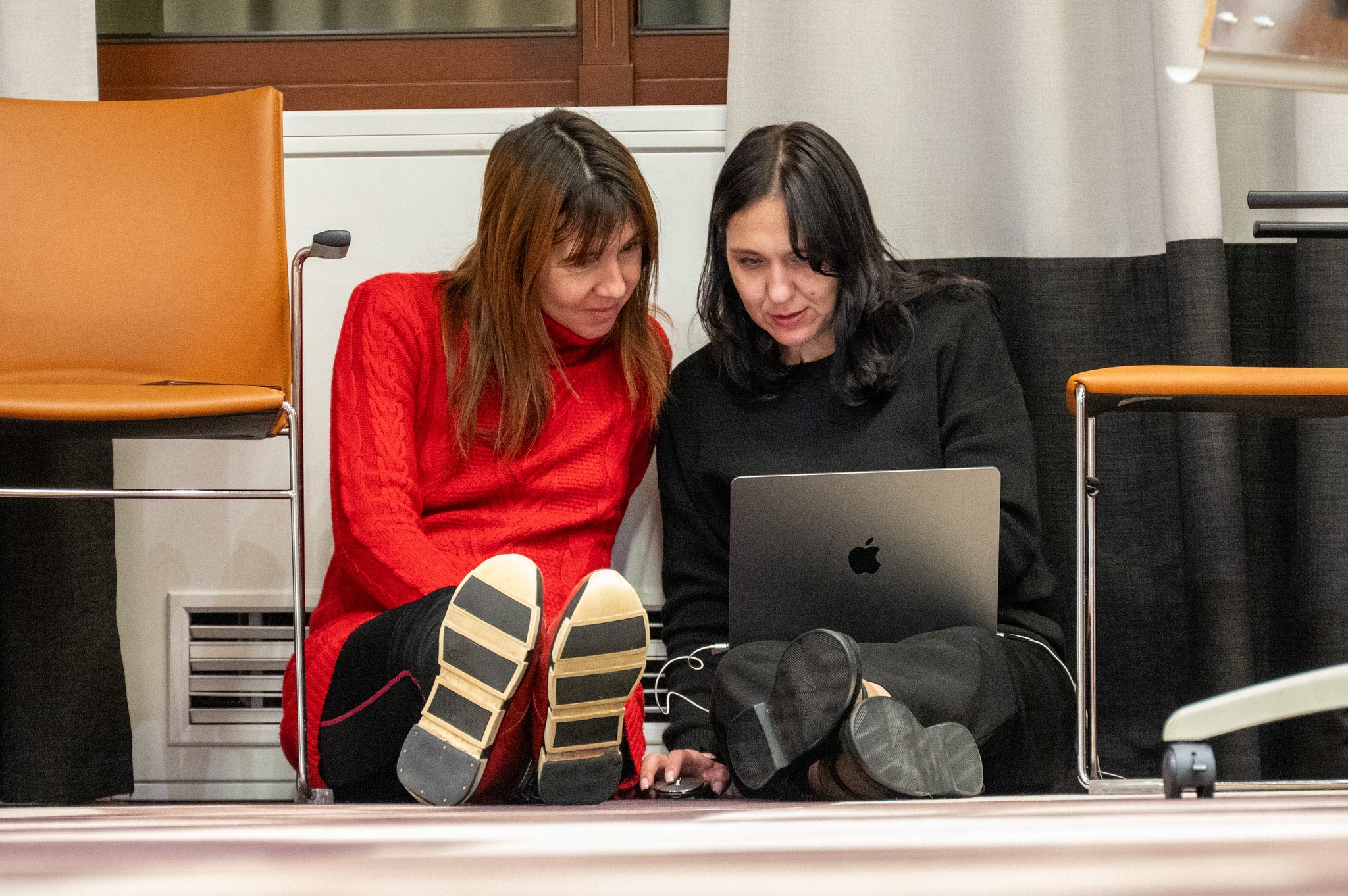


A media lab in co-production format means several days of exhausting work on a shared story, arguing with colleagues and sometimes with the trainers, not always satisfied with your own footage or copy. And then, at some point, something shifts — and what you have is a vivid, finished piece, fit for broadcast or print. The participants in the media lab — journalists from regional outlets — were learning universality and collaborative production over four days as part of the Improving Media Resilience in Ukraine Project.
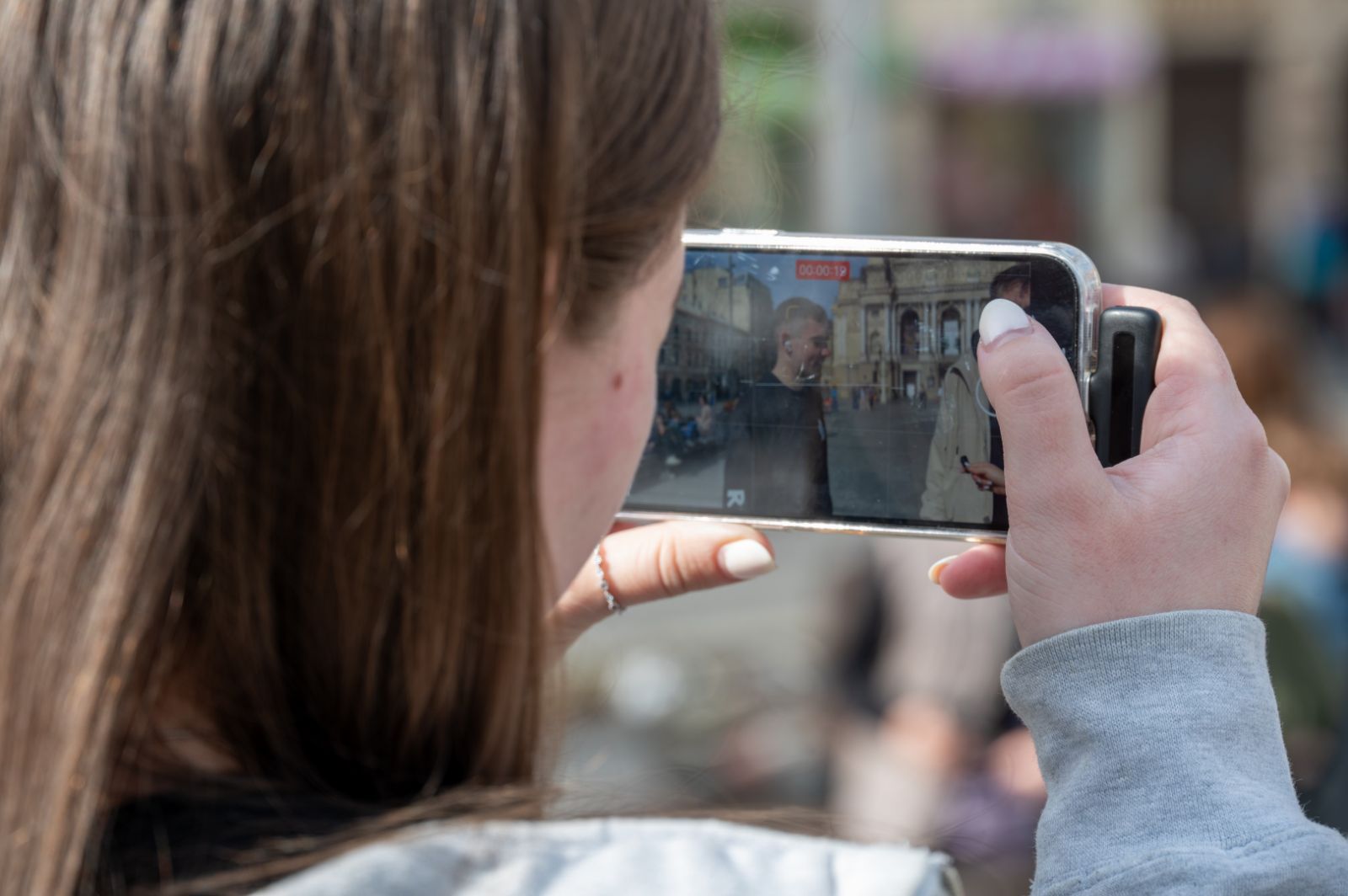
Journalists worked in pairs on topics they had brought from their home cities — subjects relevant to each of the two communities represented in every pair. On the opening day, the conversation turned to new forms and tools needed for producing multimedia content. Participants discussed the topics they had chosen, the angles they wanted to take, worked out what footage needed to be gathered in Lviv, arranged shoots, and found local protagonists for their stories. Each participant was required to produce not simply a joint piece, but content in the formats their own outlet uses — video, photography, material for websites, and more. IRMI supplied the editorial teams with DJI Osmo Mobile camera stabilisers, and journalists began learning to use them on the very first day.
Natalia Chaika, RIA Pivden, Zaporizhzhia:
“Producing video, text, and photography — all within a tight timeframe, combining experience from two different cities so that the result is both visually strong and informative — that was new for me. Although this isn’t the first time I’ve worked with colleagues from Visti Prydniprovia. We exchange topics and material. In journalism, connections are everything. When I can write to a colleague in Cherkasy region: “Your subtitles are wonderful — which app do you use?” And she recommends something. Or when you need to illustrate a piece about a prisoner exchange and you write: “I saw you had video of that — could we use it on a co-operation basis?” That is journalism. These connections improve our work and make us, among other things, multimedia journalists.”
This training served as a space for putting co-production skills to the test and developing them further — alongside the preparation of material for different media platforms: text pieces, photographic reports, video. Every pair had to combine a strong idea, shared between two communities, with professional execution, and to account for the specific audiences their outlets serve. What came of it was presented at an end-of-training showcase, where participants had the chance to discuss openly what had genuinely worked well and what still needed more attention.
According to trainer Yurii Vasyliev, the standout achievement was the teamwork itself: “We watched the journalists argue within their pairs. They were working towards results that would satisfy not only the mentors but every community, every audience, every outlet. They were motivated to work in a new format, to master the technology. There were moments of uncertainty — how to bring it all together — but once the themes began to open up, everything fell into place. In the end they produced strong material, worthy of broadcast and print. Collaboration gives them a great deal: additional reach, experience, stories that connect people.”
Natalia Mukha, Nove Zhyttia, Liubeshiv:
“The format of working jointly with colleagues from another region was, honestly speaking, a revelation for me. It felt like a genuine responsibility — I was anxious about whether I’d be able to contribute properly. But the topic we chose was, I think, a strong one, and that helped us find our common ground and build a coherent, unified piece. With the trainers’ support, I believe we managed it. The subject — our cultural heritage — is what identifies a people. If we can preserve it, we preserve ourselves. Right now, that is the second front.”
Nazarii Vivcharyk, Procherc, Cherkasy:
“It’s not easy to work in a team when you have to reconcile your own vision, your plans, the structure of the piece with a colleague who has her own point of view. But that’s also what makes it worthwhile — everyone brings something. While you’re absorbed in the technical side, your partner is thinking about the content, and so on. What will stay with me? The media lab — I hadn’t heard that term before. Working with different formats and how to keep the balance. And teamwork: when someone new joins in with their own style, it’s genuinely interesting to see what the two of you end up with.”
The final day of the training was given over entirely to analysis and strategy: participants examined the results of a comprehensive sociological study carried out for the project by the Umbrella research group (Kyiv). The title — Media Consumption and Audience Preferences of Local Media in Seven Frontline Regions of Ukraine — speaks for itself. And it offered more than a general overview of what is happening to regional media at large. Crucially, the sociologists provided a separate assessment of each frontline media outlet participating in the project. Drawing on the research, every editorial team can now take stock of its achievements — large and small — over this difficult period, and decide where to go next.
Natalia Kobzar, Status-Kvo, Kharkiv:
“We had been working away without noticing how much better we’d become over the past two or three years — but today, thanks to the research, it is such a pleasure to be able to say it out loud: yes, we have improved. In part through this collaboration with the project. And it’s a remarkable story — in April 2022, closure was already looking like the obvious outcome. And yet here we are, talking about development. That is genuinely extraordinary. I can point to specific things: we now produce video, our writing has improved, we received a Reader Trust Certificate from Reporters Without Borders. And I want to offer a particular thank you for the consistent advice, at every meeting, to lift ourselves out of the day-to-day grind. That is what made it possible to actually decide where we are heading.”
During the brainstorming session, three groups of journalists worked on ideas for updating their development strategies and content. The collective discussion — with sociologists, trainers, and colleagues from other outlets — made clear what lies ahead: expanding audiences, drawing them into more active engagement with the life of their media, and developing new subjects, directions, and regular features.
Her colleague Svitlana Karpenko, Trudova Slava, Orikhiv:
“The research was very useful. Speaking specifically about my own frontline media outlet, our greatest strength is, still, trust and local presence. Our weakness is the way we present material. And there is a lack — of course — of modernity. Which means there is room to grow.”
The training was held as part of the Improving Media Resilience in Ukraine Project, implemented by Fondation Hirondelle (Switzerland) and IRMI, Institute for Regional Media and Information (Ukraine), and funded by Swiss Solidarity.