


How do you cover reconstruction professionally? How do you provide audiences with clear, quality information on a subject of such complexity? The project Supporting Local Media for Transparent Reconstruction Reporting — implemented by IRMI with support from the EU4Reconstruction programme and the participation of the French national agency Expertise France — is now under way. As announced, work begins with a three-day intensive training for the editorial teams selected to take part.
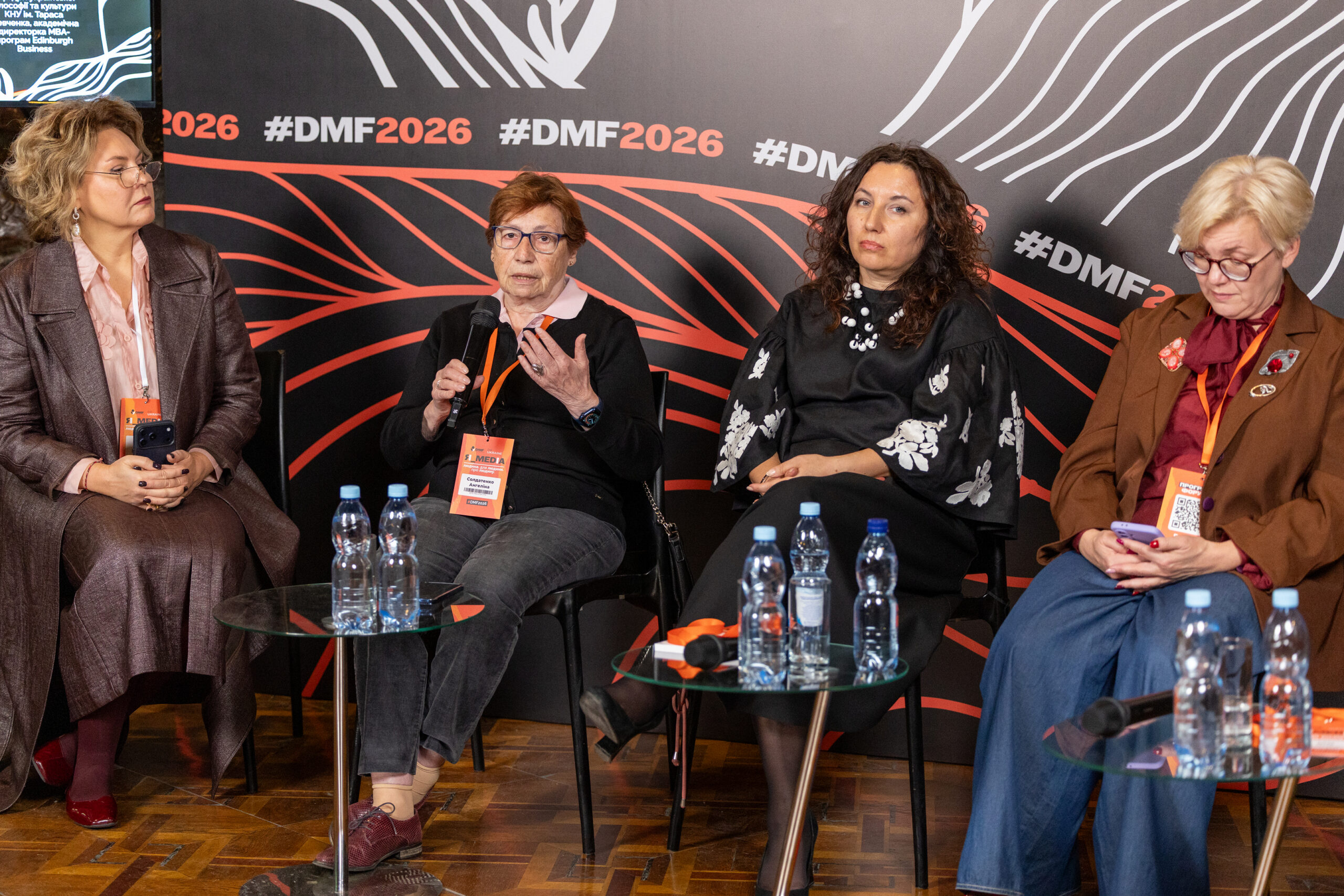
The subject is reconstruction in all its dimensions. Archil Zhorzholiani, EU4Reconstruction team lead at Expertise France, addressed participants directly and underscored the importance of journalistic coverage of this theme. EU4Reconstruction grants officer at Expertise France, Oksana Pozyvaylo, gave an overview of the programme, its scope, and the possibilities it opens up in Ukraine.
Sociologist Olesia Huzenko spoke about the state of public discourse on reconstruction — what Ukrainian citizens think, how they define their priorities, and where the most acute problems lie. People want to live in a fair city and to have equal, equitable access to infrastructure, the research shows. Journalists then assessed — against a set of concrete markers — how fair their own cities actually are. That was the practical task.
The day also took in the major trends and outlook for media in 2026. There is no room for complacency: according to the Reuters Institute for the Study of Journalism, only 38% of media managers and editors feel confident about the future of the profession. Media outlets are navigating rapid technological change, falling audience trust, and the erosion of traditional sources of traffic. How to account for the specificities of this landscape — its challenges and complications — while remaining relevant, maintaining the status of a trusted source, and covering reconstruction with professionalism and transparency: these became the central questions of the day’s main discussion.
Nazarii Vivcharyk, editor, Procherc, Cherkasy:
“Reconstruction is not merely concrete — it is, above all, transparency and ethics. We’re accustomed to thinking of reconstruction as a building project, but the journalistic gaze has to go deeper. We worked through the three pillars of recovery: transparency, accountability, and ethics. Legal aspects and data. I now have clear algorithms for working with statistics and registers — for following every penny spent. We learnt to identify the pressure points where good intentions can become corrupt schemes or wasteful use of resources. A particular insight concerned what to pay attention to at the design stage: inclusivity, energy efficiency, human scale. Reconstruction, at the end of the day, is not a return to what was there before. It is not simply restoring walls. Real recovery begins not with an architectural plan, but with the restoration of trust between the community, business, and government. We’ve already developed a range of stories that we’ll begin pursuing in Cherkasy region.”
The training also covered the legal aspects of reconstruction most directly relevant to journalists. Participants assessed the level of tolerance for corruption within communities and the business environment, and examined the potential for media to identify and evaluate corruption risks. Inclusive decision-making processes and community conflict resolution also featured on the agenda.
Discussion, practical work, and case studies were never in short supply. Journalists brainstormed options and instruments for audience engagement. The collective conversation — with sociologists, trainers, and colleagues from other outlets — made plain what comes next: broadening audiences, drawing them into the active life of their media, developing new subjects, new directions, and new regular features.
Svitlana Zalizatska, editor, RIA Pivden:
“The project maps directly onto the subjects our journalists work on and that our audience needs — social cohesion and recovery. Reconstruction is not only the physical rebuilding of structures; it is the restoration of displaced communities, including that of Melitopol, and the psychological recovery of people. Particularly valuable were the tools for finding and analysing information, including work with the DREAM platform and the application of the LOOP approach in preparing material. The sociological findings on how society understands and perceives the challenge of reconstruction were illuminating. And the practical introduction to the concept of the comfortable “15-minute city” — alongside the emerging “5-minute” variant — broadened my thinking about spatial planning, quality of life in communities, and how to approach the coverage of reconstruction. I am returning to the newsroom with a roadmap for future publications.”
The Supporting Local Media for Transparent Reconstruction Reporting project is implemented by IRMI, Institute for Regional Media and Information (Ukraine), with support from the EU4Reconstruction programme and the participation of the French national agency Expertise France.