

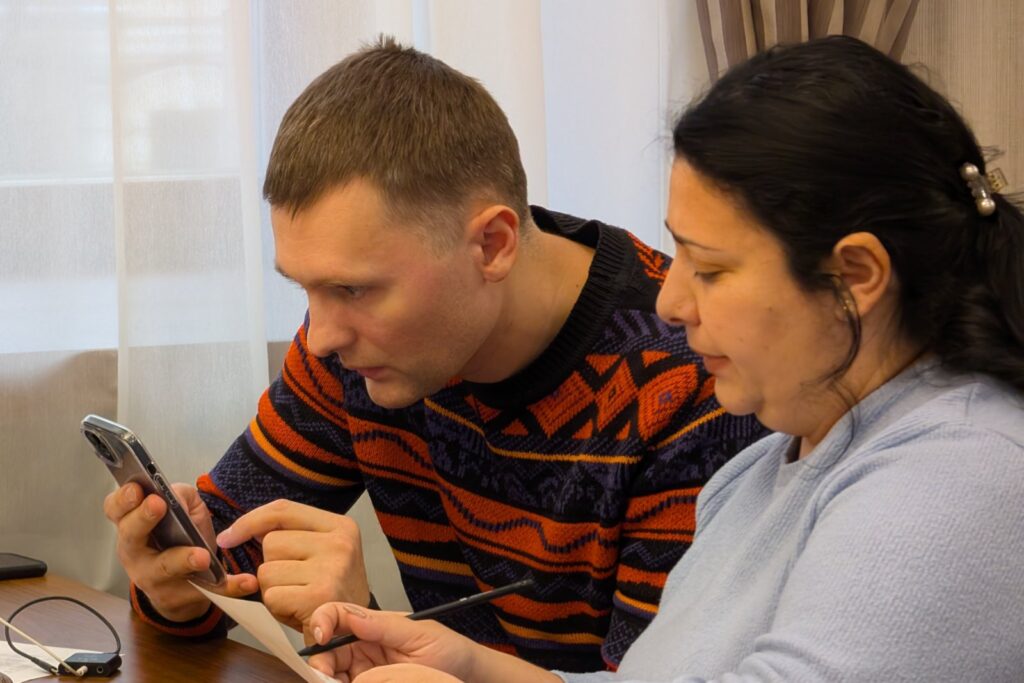
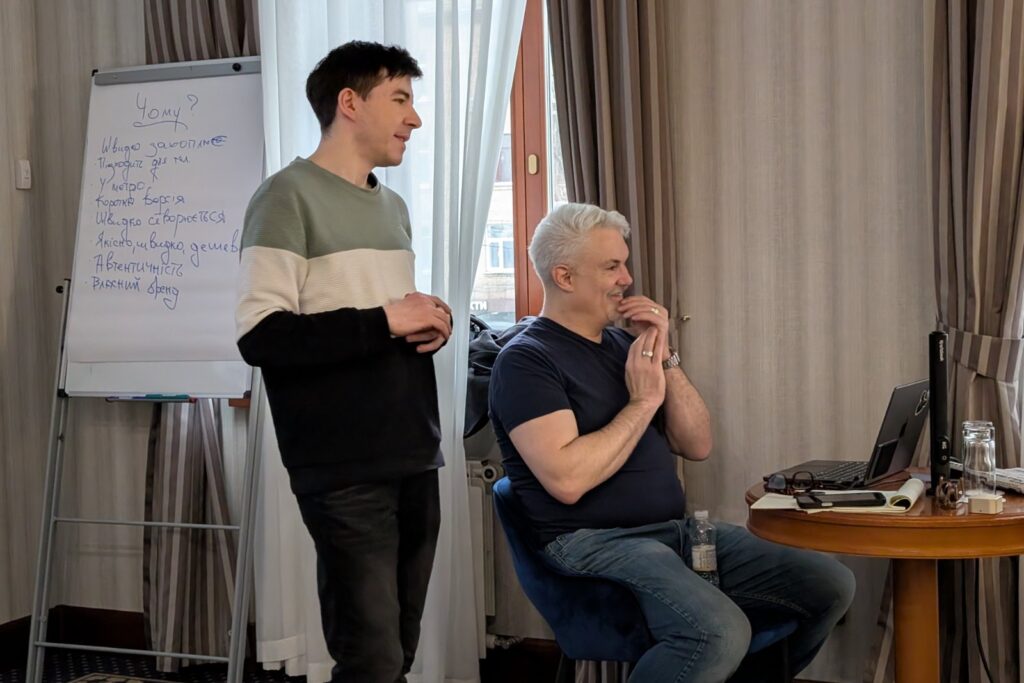
Together with Fondation Hirondelle, we ran a training for journalists interested in deepening their video skills. The course was designed for two distinct groups: those making their first videos for their newsrooms, who want to develop, and experienced journalists who have been filming and editing on smartphones for a number of years.
Liudmyla Fediuk, editor of the newspaper Karpaty (Chernivtsi region), says that as a print journalist learning to work with video, everything is of interest to her. “I connected my colleagues remotely so that they could get some sense of what video content should look like and why we need it at all,” she explains. “People don’t only want to read text — they want video, and if we want to keep and grow our audience, we have to give them that. I can only add one thing: if the training had been longer, that would have been even better.”
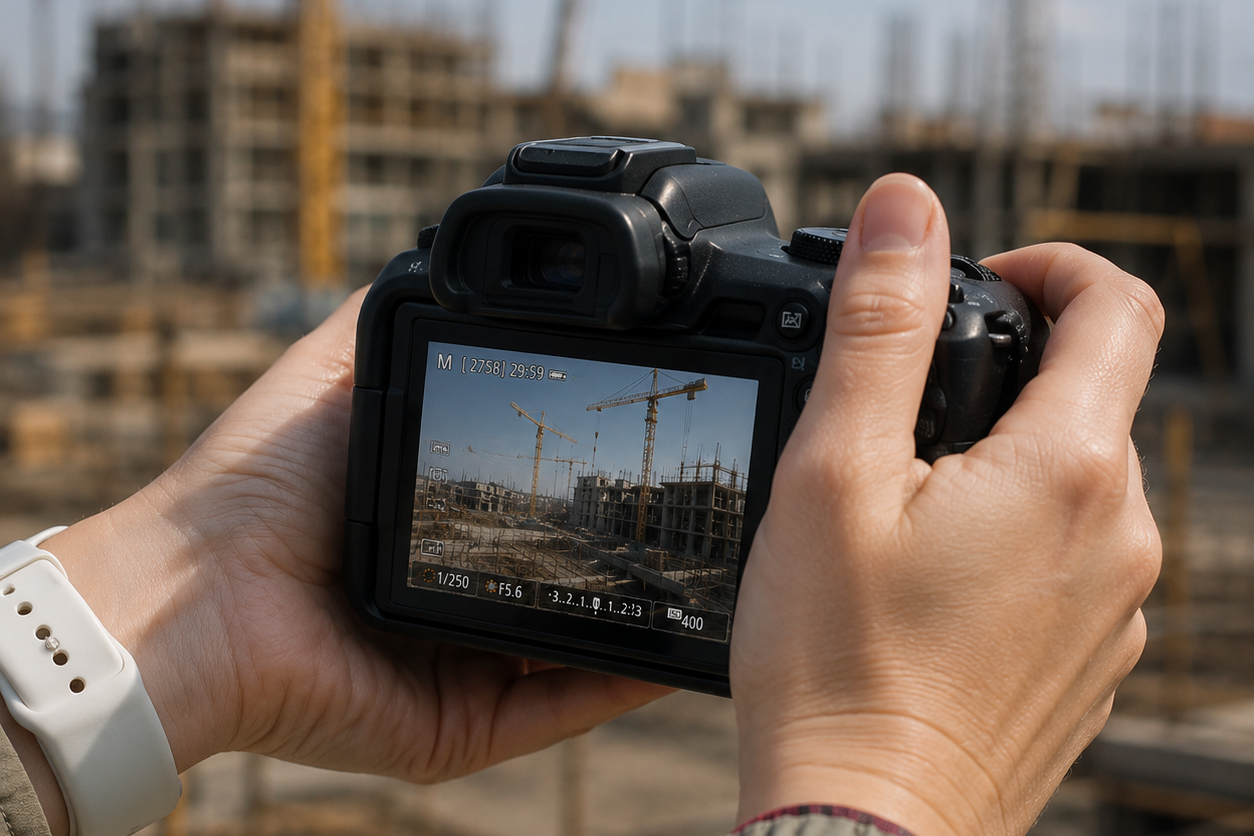
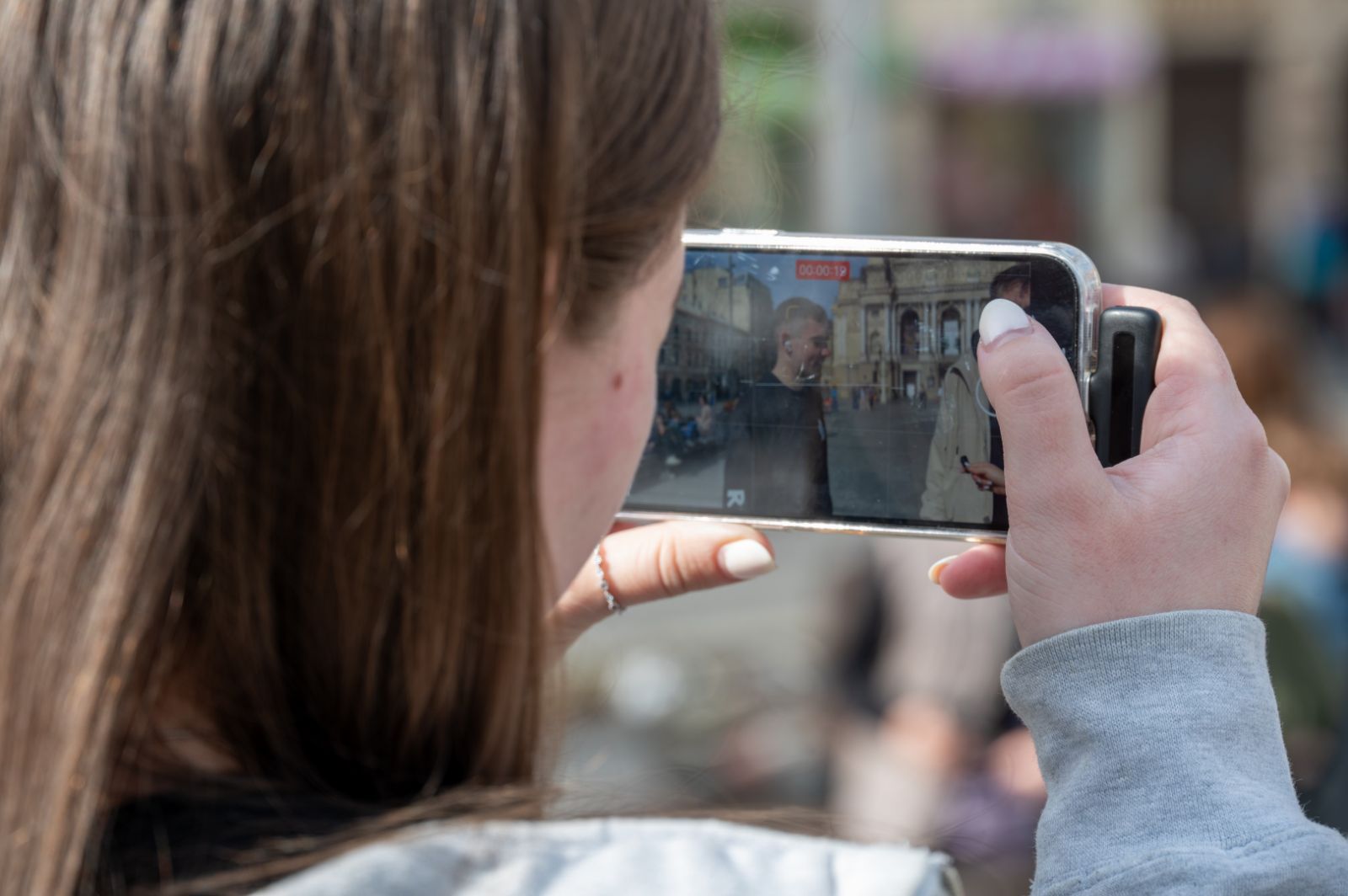
The main emphasis this time — from trainers of both IRMI and Hirondelle — fell on mastering a new format: short vertical video for various platforms. Journalists worked through the techniques most suited to this kind of content, practising shooting and editing approaches, and thinking carefully about how to capture a viewer’s attention and tell a vivid story in a matter of seconds.
Yulia Vynnyk, 0512 — The Mykolaiv City Website:
“I learnt a great deal of practical material — cutaways, for instance. I’d been making them three to five seconds long, which seemed sufficient, but it turns out a properly effective cutaway should run to ten seconds. We also worked on camera movement without a tripod. There was an enormous amount of hands-on practice and useful techniques — how to edit, how to frame a wide shot, how to work close up. We want to develop our social media presence with engaging short videos: quality information, delivered quickly and accessibly. Not only longer pieces about events in the city, but short, tight stories.”
Vira Lapa, Horodok TRPC, Horodok:
“I had assumed there was a ceiling to how much more independent a journalist with even a basic grounding in MOJO journalism could become. But I broke through it — for the first time I went out to do a vox pop entirely on my own. Street interviews had always meant working with a camera operator. This time I conducted two of them, and I understood that I can do this — technically as well. People want more short news — text and video alike. And I saw for myself that even fifteen seconds is more useful and more effective than, say, a minute or two. To be able to focus, to communicate something interesting, to hook the viewer, to tell a story — that’s a real skill. If people spend more time on social media than reading websites, then that is where we have to reach them — capturing their attention and doing our best to draw them back to watch our full reports and read our longer pieces, alongside short videos and the conversation that happens in the comments underneath. And that means we’ll understand each other better.”
The training was held as part of the Improving Media Resilience in Ukraine Project, implemented by Fondation Hirondelle (Switzerland) and IRMI, Institute for Regional Media and Information (Ukraine), and funded by Swiss Solidarity.