Local Newspapers: Survive to Thrive

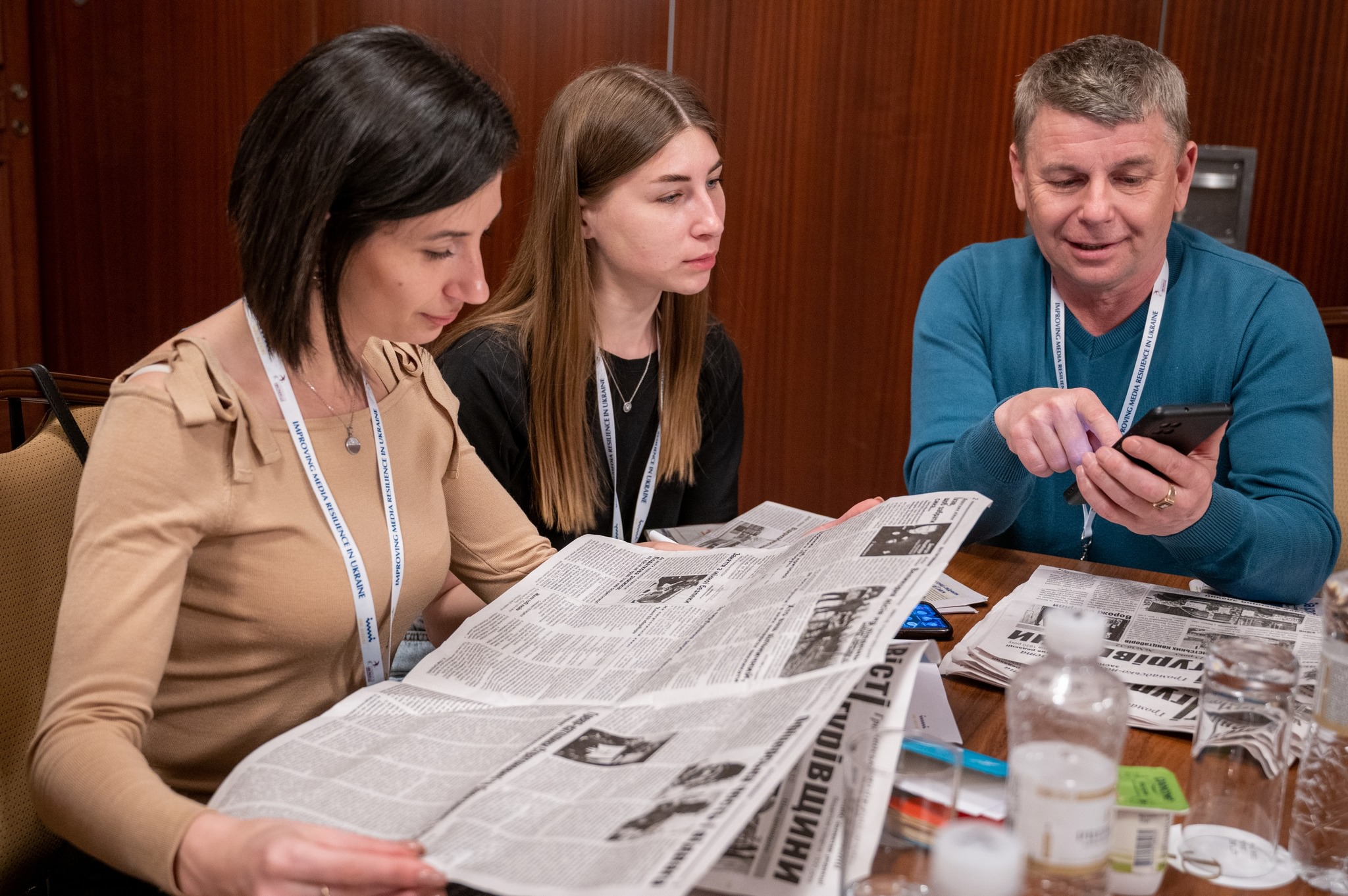
Local newspapers in Ukraine on the frontline and de-occupied territories mostly resumed their operation, however, one in every two print editions reduced the publication frequency by 2-4 times, almost all of them reduced the number of pages by an average of half. The Union of Journalists of Ukraine presented a study of the needs of media from the de-occupied and front-line territories, conducted as part of “Improving Media Resilience in Ukraine”, implemented by IRMI in partnership with Fondation Hirondelle and funded by Swiss Solidarity. Almost a third of the research participants are editors participating in the project.

Forced stop

According to the results of a survey of 30 newspaper editorial offices in 10 regions of Ukraine, 90% of local publications did not work for almost six months. “Mayak” newspaper (Kharkiv region) during the almost three-month forced downtime due to Ukrposhta’s terminated operations published “Frontova Gazeta” in A4 format with a circulation of 200-400 copies. According to the editor, “it was distributed free of charge in shops, village councils, libraries under the motto “Read it – pass it on to someone else!” During this period, one full-length newspaper was also published, which was delivered to subscribers by the newspaper staff. It was costly and slow.”

Even now 63% of editorial offices admit that their current capacity in terms of assests is not enough to ensure their full running frequency.

Teams

In 80% of editorial offices the number of staff working on creating a newspaper has decreased. Mainly due to the inability to pay the salaries. One in every four editorial offices has one or two people working on putting a newspaper together.

Locations

Slightly more than half (52%) of the surveyed newsrooms are currently based in their pre-invasion operations. The other half of the newsrooms relocated completely (30%) or partially (18%). In fact, only a third of the newsrooms have now restarted their operations in their former premises. Another 20% operate in a hybrid format: combining the offline work with the remote work, every other editorial office works just remotely.

Income and salary

Only two newsrooms declared 30 percent or more of advertising revenue in the structure of the newspaper’s total revenue, while the majority reported their complete or almost complete absence. Here’s something about subscriptions: according to some of the interviewees, Ukrposhta does not engage in newspaper subscriptions, so this channel should be factored out. People living in rural areas refuse to subscribe “due to poor quality and untimely delivery”.

Almost 40% of editorial offices have reduced or completely stopped the retail sale of publications due to the temporary occupation of the territory, the proximity to the war zone, the complications of logistics, the relocation of a large part of the population to other hromadas, and the shutting down of outlets.

The average salary in the surveyed newsrooms is UAH 8,000, 20% less than before the war, whereas one in every four newsrooms pays no salaries at all.

Only 5 out of 30 surveyed newsrooms received financial aid from the state during the war. Instead, more than half received donor funding. 28 out of 30 newsrooms are planning to apply for donor support in the coming months.

What they need, what they aspire to

Among the current priority needs of newsrooms, two prevail: financial support (94%) and training (56%).

A year since the start of the full-scale invasion, the survey says, newsrooms have realised how important it was for their media to be present on digital platforms. Many editors emphasize that while their settlements were under occupation or siege, digital channels became almost the only source of news for local residents.

“During the occupation the publication’s website and social media pages were the main channel of communication with the community” (editor from Kharkiv region).

“We had no electricity, no water, no communication. Only the Internet miraculously made its way, and we tried to get to people the information they needed” (editor from Chernihiv Oblast).

“During this year, we realized how important it is to have such platforms at this time. We modernized our site, transferred it to a new platform, we create an average of 10 posts for it every day. Before that the site was scarcely used, it had about 1,000 unique visitors per month, now it has 9,000. On Facebook the results are even better – we have a reach of 45,000 compared to 3,000 in early February” (editor from Donetsk region).

 “We want to learn how to better promote the site and attract a larger audience”;

“Employees need to be trained on how to work with the newly created website”; “We need to learn how to work with a website and a group on social media: how to promote content, make it readable, how to monetize media platforms, and how to attract advertisers”;

“We need training courses for employees on the promotion and popularization of the site (SEO, SMM), as well as training on the promotion and administration of the publication’s Telegram channel and social media pages. Training on how to shoot and edit video content for You Tube channel, Instagram, TikTok».

“Thanks to financial support, media and the staff can be preserved,” Oleksiy Soldatenko, Project coordinator, Director of International programs of the Institute of Regional Press and Information (IRMI) comments on the survey findings. – But regional publications going forward need sustainable development, digital transformation, mastering of new professional skills in order to become more up-to-date and competitive. Therefore, along with financial assistance, the project offers mentoring for editorial offices and conducts trainings for journalists. We help with technical equipment that allows the newsroom staff to become more mobile and more professional. According to the survey findings the editors of the publications are aware of the prospects of content distribution on digital platforms and are very interested in continuous training.

The Ukrainian press at the front-line and de-occupied territories today is a symbol of unity, faith, and inspiration for Ukrainians to fight and win, Head of the NSJU Serhiy Tomilenko is confident. In the frontline areas, where there are problems with communications, traditional print media, which are trusted by local residents, are getting a second wind.

Even though for many editorial offices recent years have become a time of rapid digitalization, thanks to which they were able to create decent content and maintain contact with the reader, there are still many problems. Many of the editors combine the functions of a manager and a journalist for their publications, handling the development of digital platforms. Despite significant challenges they understand the need to work systematically and professionally to not just survive, but also carry on and develop.
How Do You Frame Your Story? Journalists are Showing More Mobility

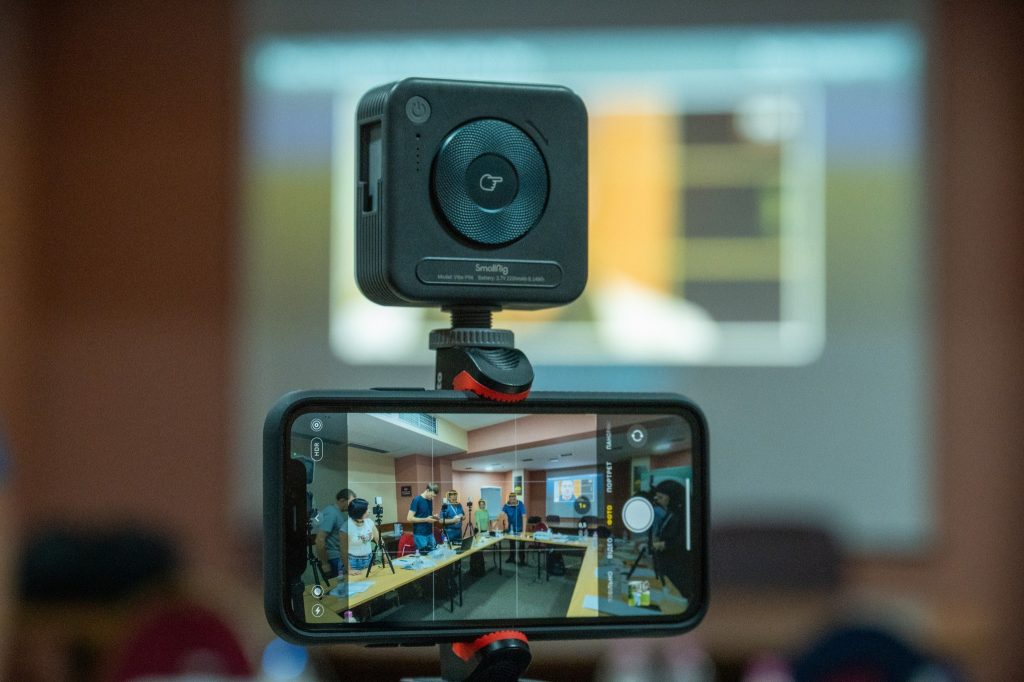
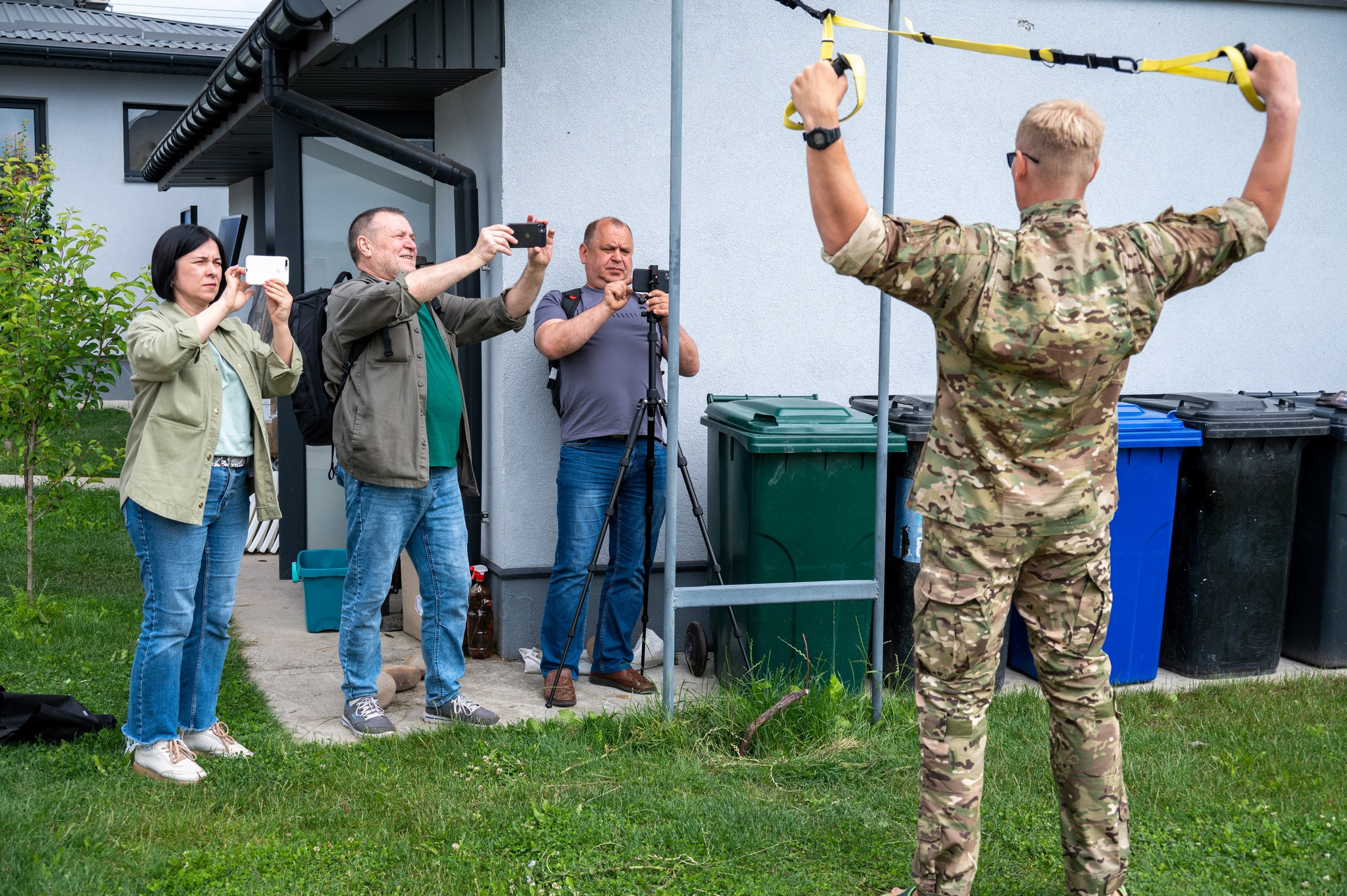
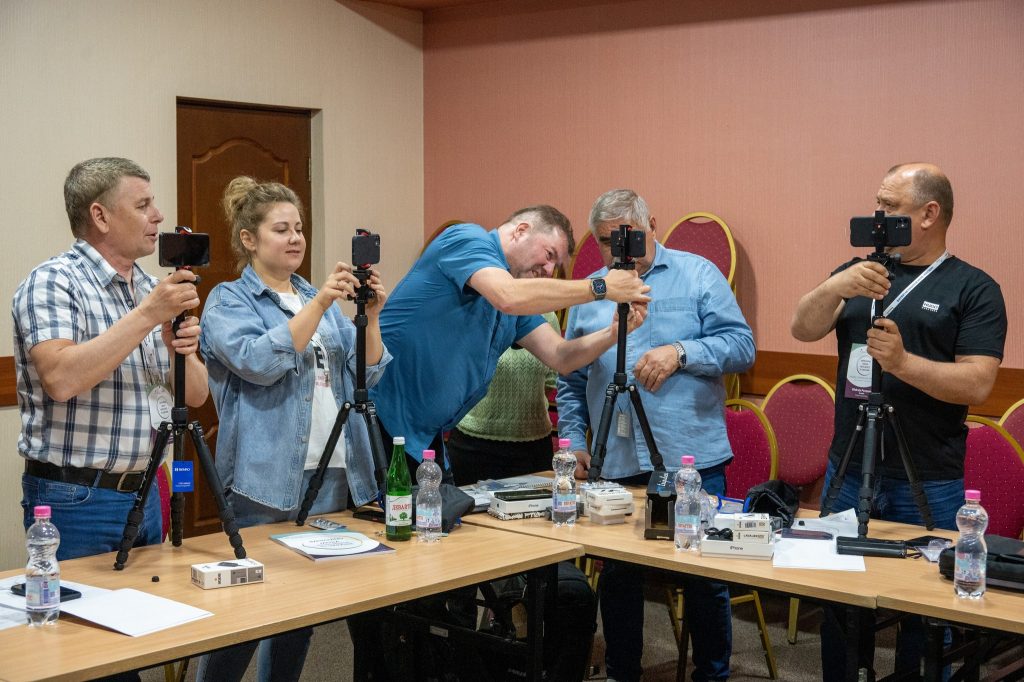
How can you master interview and video shooting techniques if you are a journalist for a print or online publication (or even work “on multiple information fronts”), but with no relevant experience? This week a  mobile journalism training was held in Ivano-Frankivsk for representatives of editorial offices that we support as part of “Improving Media Resilience in Ukraine” project.

The training contained minimum of theory and maximum of practice. Why mobile journalism? The topic was chosen at the request of the editorial offices. The ability to produce high-quality content with the tools that are at hand has become particularly relevant in the conditions of war, the loss of equipment by displaced editorial offices that remained in the occupied territories or was destroyed during enemy bombing. In addition, almost all print publications have added online versions. Mastering mobile technologies means making it easier for the audience to access information, make it more complete, and make the news more mobile. New knowledge and increased capacity make the media more sustainable and competitive.

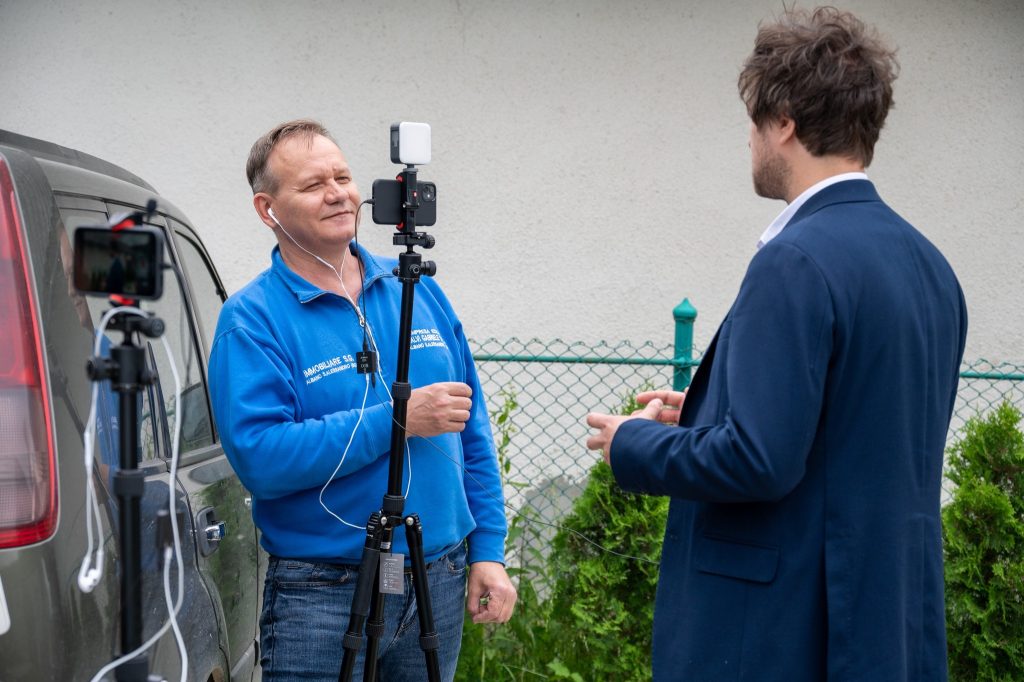
So, we practiced using a smartphone “to the fullest” for shooting and even editing videos, learned how to make use of sound equipment, master the sound interface and additional video shooting techniques, and how to build out a frame. Where exactly to shoot an interview, how to avoid mistakes when recording and editing it. The trainers taught the trainees how to plan a shoot and tell a story.

Then practice followed – a chance to use new knowledge and skills to collect material for stories. Impressive and inspiring at the same time, as we expected, were the meetings with the protagonists working in the first volunteer surgical hospital. These are volunteer doctors, displaced persons from other regions of Ukraine, who are now rescuing, treating, rehabilitating, and supporting Ukrainian soldiers. Patients also undergo psychological rehabilitation in the center, where, among other things, they are also offered hippotherapy. Is the importance of psychological support for people who have returned from the war for the social cohesion even be brought up?..

“We worked with journalists who came from different media outlets all over Ukraine,” says coach Velislav Radev, whose listeners and viewers were forced to leave their homes because of the war. Editors and journalists in such circumstances must be particularly resourceful to deliver content to their audience. Actually, this is what we learned: how to edit videos, work with a new tool for media professionals.

These days there were very tense moments – as the participants say, from complete rejection of new forms of work to the satisfaction with the fact that everything “turned out so well”. TV people willingly supported their colleagues and shared their experience. And here is the finish line: at the impromptu end of the film festival training, participants presented stories that will later be posted in the media where they work.

– This is the first time I’ve come across such equipment, even this tripod – it’s very professional and easy to use. The topic is new, it was challenging to master, but I have learned something, and we need to move on. All the days of the training were full of practice, the principles of composition, editing, video sequence preparation I remembered the best. My intention is to put those in practice, even though I am working for a print media outlet. You can use it for announcements or make interviews, you can shoot our events, – says Tetiana Luchinskaya, Editor of the Mayak newspaper (Bohodukhiv).

– It was very useful for us, because we do both print and online, producing content for social media and the YouTube channel. Of course, we don’t have the same experience as TV people, but we want to be faster, more mobile, do bigger reports, going to the field without bulky equipment, but with the gadgets we have been trained to use. ‘People are interested in videos, we could develop the YouTube channel with a QR code to send the users to the channel, – says Anastasia Kovalchuk, a journalist for Dniprovska Pravda.

Each editorial office received professional equipment for its own use – smartphones, microphones, tripods, adapters, LED lighting, and professional backpacks for equipment. We hope this will help the journalists implement what they have been striving for.

The second group of editorial staff representatives to work on the topic will meet in Odesa.

The trainings are part of “Improving Media Resilience in Ukraine” project, which IRMI has been implementing in partnership with Fondation Hirondelle. The project is funded by Swiss Solidarity.

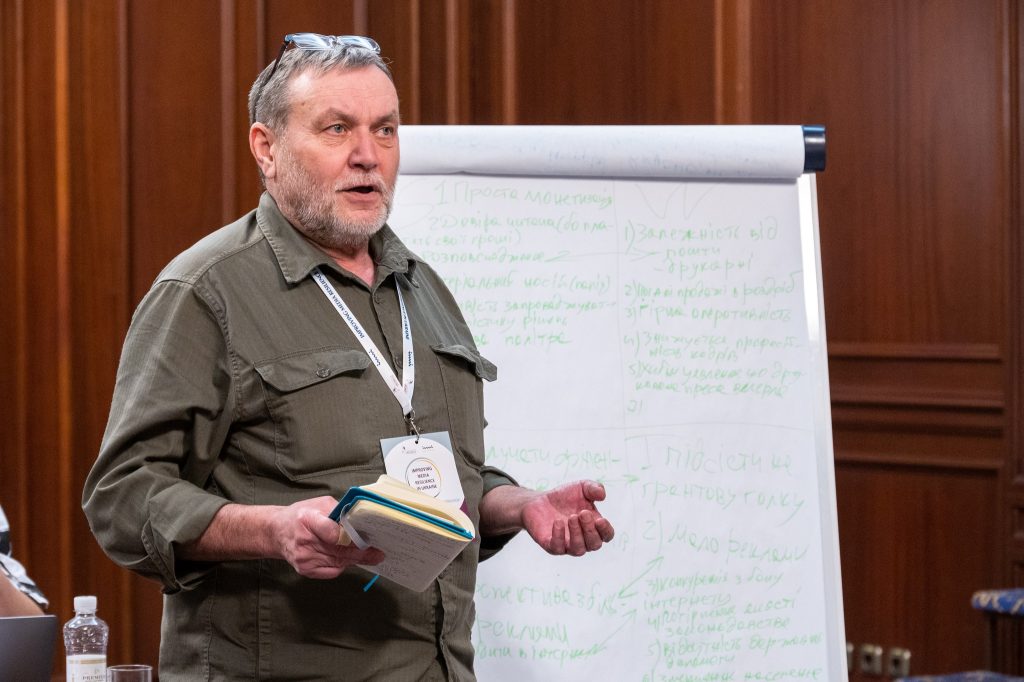
We Discuss Media Challenges and Choose the Topics for the Mentoring Sessions

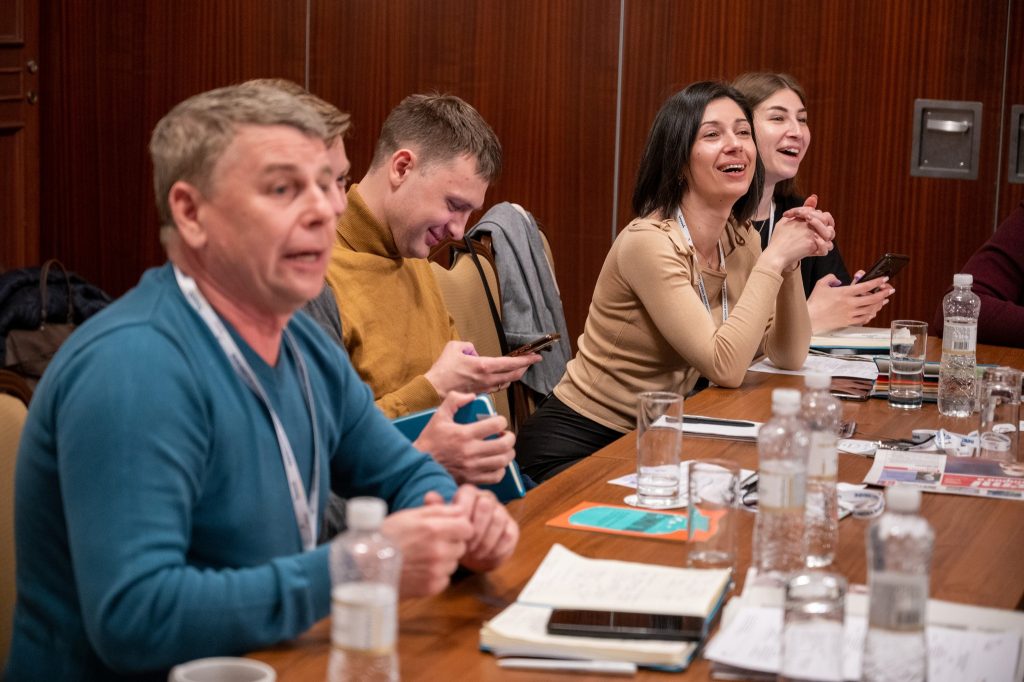
Improving content, enhancing trust, implementing modern media management. What kind of mentoring support do regional media editors expect as part of “Improving Media Resilience in Ukraine”, we are discussing during a two-day working meeting in Kyiv.

Today was the first time the representatives of all local media involved in the IRMI and Fondation Hirondelle project got together. Mentoring, along with financial support, is an integral part of the project, but what are the priority needs? What do media workers expect from mentors – improvement of editorial work and/or management? Support with the development of online resources?

In the first place the discussion was around the key and most painful challenges of editorial offices, which, despite everything, provide their audiences with high-quality, tailored content in extremely difficult conditions. They got to know each other. They shared problems; they discussed how each of them trots their path to the reader these days. How they survive, sustain their editorial offices, and adhere to professional ethical standards. They discussed the best ways to their audiences, who, according to the editors, had changed a lot since the beginning of the invasion. How to create Internet resources so that the content is spread to the best capacity. They gave unique examples of seeking new resources for development (“NikVesti”) – although they are used to their readers being their main funders. It was said that media credibility helps to grow the audience even during the war (RIA Melitopol). Iryna Saliy, editor of “Court Reporter”, shared how to join the project component related to the coverage of court proceedings.

The discussion also focused on tools for measuring audiences, studying their urgent needs and changes that are taking place – how to measure under the conditions of limited editorial budgets. Other constants should be factored in to remain in demand – awareness of the importance of editorial policy, compliance with ethical norms, also during the hostilities. Guests Brendan Hoffman and Oksana Parafenyuk, independent photojournalists who work with foreign media, joined the discussion: they told how foreign newsrooms work, what ethical standards they follow, how they satisfy the needs of their audiences. They compared, analyzed, were interested in the attitude of editorial offices to information about the situation in Ukraine.

So, what trainings and consultations as part of mentoring support do our participants need? Working with databases, SMM and SEO, content for social media, seeking advertisers, editorial work under de-occupation, social cohesion and dialogue building, mobile journalism – these and many other topics were chosen by journalists for a training, online or offline, in groups and individually. The task of the mentors is to analyze what the media representatives discussed and proposed during the two days, to factor in the media needs assessment findings. The prepared mentoring plan will be implemented during the last months of the project.

Olena Astrakhovich, TV journalist GRAD Broadcasting Station:

– Many thanks to Fondation Hirondelle and IRMI for the opportunity to interact and share experiences with colleagues from the regions. It is very important during the war. The mentors’ advice and the support of donors make it possible for the local media to not only survive, but also keep up the freedom of expression in the country.

The working meeting was part of ‘Improving Media Resilience in Ukraine’ project implemented by IRMI together with Fondation Hirondelle and financed by Swiss Solidarity.

Journalism Festival: Discussing New Ways and Challenges

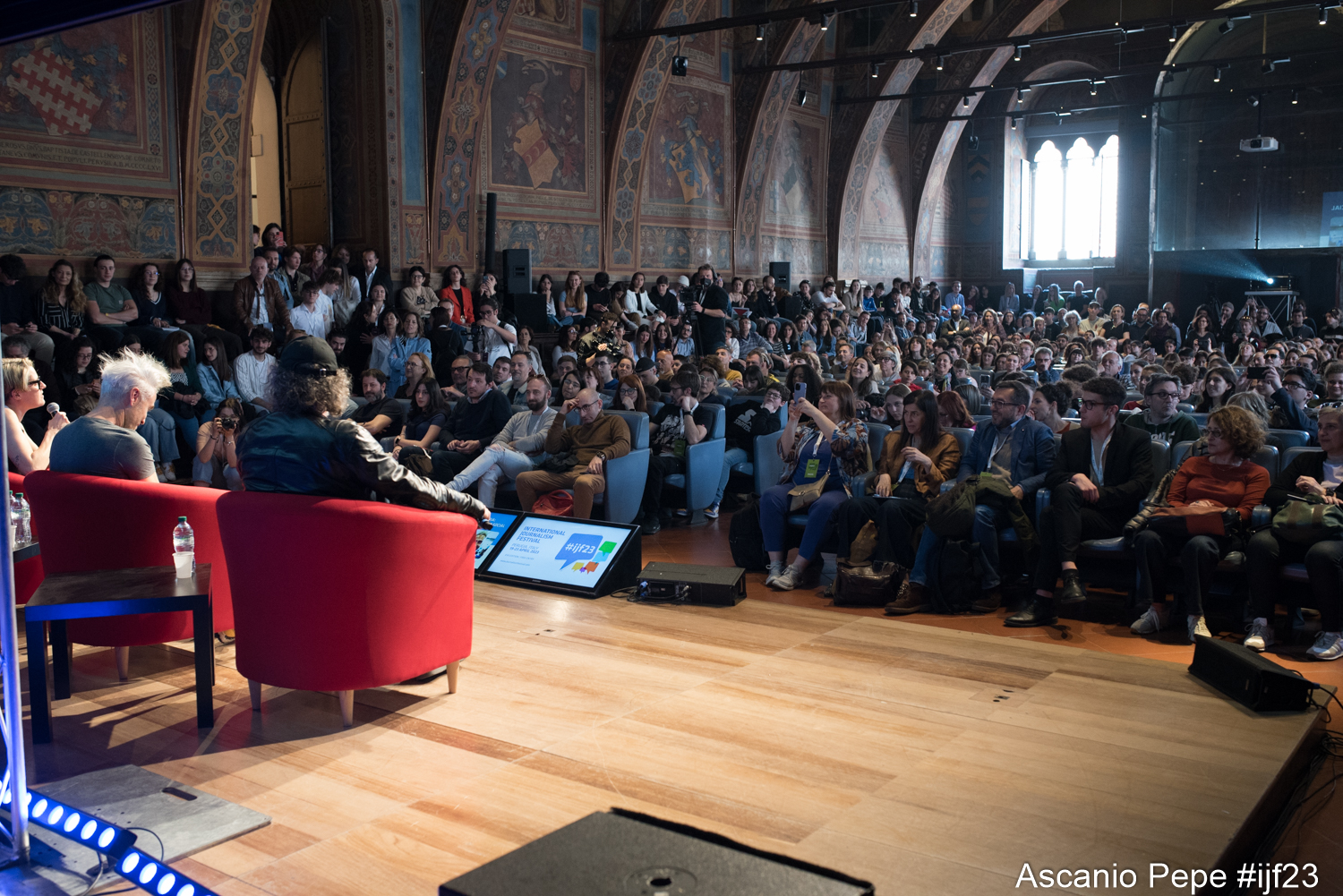
The International Journalism Festival in Perugia is the most significant event in the professional environment. Every year, since 2007, experienced specialists and students, experts, scientists, and heads of media organizations gather in the Italian city. This year, IRMI Ukraine took part in the festival too. IRMI co-founder  and executive director Angelina Soldatenko’s comment.

What are these festivals?

This is a series of panel discussions related to the place of journalism in society and the quality of reporting.  New trends, new technologies, teaching methods, media culture, and protection of specialists from a traumatic burnout. Speakers openly present their experiences and innovations. Sessions are open to access and free of charge. I am impressed by such professional generosity as evidence that there is a community interested in high-quality actualised journalism. In addition, the festival is a city of interesting meetings, exchange of opinions, ideas, and suggestions.

What was discussed this year?

Perhaps it’s easier to account for what wasn’t discussed. The discussions were on any possible thing – from the world affairs, the development of technologies such as artificial intelligence, data journalism, climate issues, podcasting, collaborative journalism, investigative journalism, including TikTok and YouTube updates. I would highlight some of the most important topics, in my opinion, mainly related to the events in Ukraine. They were discussed in both a global and professional context. The audience gave a standing ovation to The Associated Press documentaries, who brought their own reports from Mariupol to the festival. Francesca Mannocchi, an Italian journalist and author, gave an emotional speech on the world’s perceptions re the terrible war in Ukraine. These events, she said, are a test for the democracy that we are used to talking about in Europe. The speakers addressed the events in Ukraine both from the perspective of a humanitarian public and a purely professional challenge.

Another important professional topic that is consistent with IRMI’s view, which was addressed both directly and indirectly, is the relationship between the media and the audience. Discussing work planning and approaches to news production, speakers on many topics emphasized public interest as a cornerstone of the profession, and the importance of the voice of communities.     

What brought IRMI Ukraine to the festival?

First of all, the importance of, so to speak, checking the clock. The festival is a large professional school. New trends, training techniques, advanced technologies – without this, work cannot be done proper to be useful to your audience, which is what we strive for. I only regret that the work at the festival was structured in such a way that it was not possible for me to attend all the relevant panel discussions. Many of the sessions were concurrent. I was very happy to see our partners from Fondation Hirondelle, with whom we are currently implementing an ambitious project to support the sustainability of Ukrainian media, – one of the mentors who is starting to work with Ukrainian media and project participants.

Any interesting takeaways?

We will talk about the results when the proposals have been accepted and the agreements have been implemented. But there is something else that is also important, making you think, explore, and evaluate. Events in Ukraine being in public interest. In what way is it personified on a case-by-case basis? Also, are cross-platform approaches to the hyperlocal media we work with effective, and will the voices of communities be lost?

IRMI had a chance to share both experiences and views at the World Forum session organized by the Global Media Development Forum. We contributed our proposals in support of Ukrainian media to the GFMD Declaration, which is supplemented and adjusted annually with regards to the challenges in place. We believe that while fostering the sustainability of Ukrainian media, it is very important for all of us, donors, organizations that develop concepts and implement projects, to take into account the importance of professional environment with self-governing mechanisms to be shaped. This is an important guarantee of true freedom of the public interest-oriented press.

Photo – https://www.journalismfestival.com

Public Communications and PR

Training programs in this area are aimed at working professionals and graduate students that studied the theory and need practical skills. Individual programmes are intended for public communications professionals working for state, judicial and local authorities.


Current activity:

IRMI experts conduct trainings for Courts administrators on Public Communications. Within the ‘Fair Justice’ Program, USAID.

IRMI experts has good track in developing trainings and consultations in Public Communications for Public officials and Government. This specially relates to crisis communication skills.


IRMI PR School

Intensive hands-on midcareer course.

The sessions are held for small groups of trainees. The programme is practice-oriented, comprising a full cycle of public and media relations for an organization selected by trainees themselves. In the course of studies the trainees participate in master classes by leading Ukrainian and expat experts, being provided with an opportunity to go on study trips abroad, where public dialogue is a basis of management.  The diploma paper the participants are to prepare is a PR-strategy, agenda and media plan built on publicity.

IRMI PR-school alumni have won prizes in PR student competitions on numerous occasions.  Almost all of them are now working for leading Ukrainian and international companies.


IRМІ: training programmes for public and media relations professionals

  • Strategic planning of public and media relations. Setting up work of corresponding units.
  • PR as a tool of reputation management.
  • Ways to be heard. Effective low budget companies.
  • Public relations department. Key principles and methods of work.
  • Publicity and key tools for working with the press.
  • Crisis communications.
  • Internal communication and positive thinking techniques.
  • Identification tools.
  • PR and building of business reputation.
  • Public opinion in decision making.
  • Sociological tools, forms and methods of public dialogue.
  • Business communication. 

Other links of IRMI

Support to Civil Society Organizations

An important perspective on media freedom and the role of the media in democratic politics takes the interests of citizens as a starting point. The norm of freedom of the press not only protects the press, but the public communication process as a whole, which includes voices from the civil society as partners in public communications. 

For the sustainability of democratic life it is important that different ideas across all parts of society are heard. Diversity and activities of civil society players are a sign of self-organization capacities and pluralism within society. At the level of society as a whole, civil society players take on important functions in initiating discussion processes about questioning government policies and enhancing the capacities within society for negotiation processes.

Civil society in Ukraine has assumed a more comprehensive role over the recent years to the extent that the problem solving capacities of traditional players have diminished considerably.A participatory and social democracy can be considered a prerequisite for peace. In this context civil society groups have an important function: they mobilize the commitment of social groups in the peace process.

Civil society organizations play an important role with respect to societal change and democratic development in a sustainable manner. They increase the possibilities for participation of all parts of citizenship, especially those not heard in elite communications. The promotion of civil society may thus contribute to supporting democratization processes, fostering human rights and solving conflicts. Hence, strengthening the media competence of civil society actors – which include members of CSOs and protest movements as well as political activists – to be respected in the media and to communicate in the public sphere is an important strand of IRMI’s activities.


Recent activities:

  • For many years IRMI is the partner of the British Council in delivering and facilitation of the ‘Active Citizens’ program in Ukraine. The Program aims to strengthen capacities of the young leaders – from CSOs, media, volunteer groups – to develop and implement social action projects in their communities. The most recent trainings within the program were conducted by IRMI in Kharkiv, Zhytomir and Chernivtsy in 2015.
  • IRMI has delivered number of trainings for CSOs in different regions of Ukraine to strengthen their capacities in Public Communications and media relations in order to enhance the dialogue with target audiences and participate in policy dialogue.


Main areas of expertise for CSOs:

  • Organisation’s mission, goals and tasks, as a precondition of its development.
  • Key factors of effective management.
  • How to organize the work of a team.
  • Who we are and who do we work for? How do we build trustworthy relations with clients and CSOs?
  • Media cooperation and social adds.
  • Highly effective and low budget PR-campaigns for CSOs
  • Using sociological tools when working with CSOs. 

Other links of IRMI

Journalism and Media

Free and independent mass media are essential for the building and development of an open and democratic society. A free flow of information delivered by the printed media, radio and television and Internet is an absolute necessity in a political system where every citizen must have the possibility to form his or her own opinion. Independent media are critical to development, democracy and dialogue. Media give people a voice, acting as a balance and watchdog to potential misconduct, corruption or crime. But the impact of the media is not limited to the area of politics. Economic development is benefitting from more openness and access to economic information so that citizens have better information about what is happening in their communities and in commercial and financial markets, allowing them to make better-informed choices.

In most countries everyone can call himself ‘journalist’. Everyone can establish a publishing company and bring another newspaper or magazine on the stand. Journalism, however, is a profession as well as a pillar in democratic public spheres. Based on this principle IRMI does not recommend authorities to limit the profession of a journalist only to those people that graduated from one of the official educational institutes. Most of all it is the responsibility of the publishers and/or the editors-in-chief to protect the quality of the profession. They can do that by hiring only very well educated, high qualified people for the job. IRMI was established to contribute in a system of professional education based on expertise in this field in all parts of Ukraine and in other countries in Central- and Eastern Europe. Hence, IRMI has contributed and is contributing to professional role understandings, work practices and ethical orientations of journalists. In the last decade this expertise has been transferred to Ukrainian partners in the framework of special ‘train the trainers’ programs.
 

The recent activities of IRMI in the field of media and journalism include the following:

  • 2014-2015 – Conflict Sensitive Reporting. The project of trainings and production workshops for regional media with a special focus on reporting IDP issues. In partnership with Thomson Foundation (UK) and under the support of the UK Conflict Pool
  • Media production sessions for Hromadske TV. Number of documentaries on IDP situation in Ukraine were prepared as the result of a special training and production sessions in Kharkiv, Odessa and Lviv.
  • 2015 – “Students Newsroom”


Some of the previously implemented projects:

  • «Ethics Code for Journalists as a Contract with Public», in Kharkiv and Lviv for journalists of print and on-line media.
  • “Information Wars and International Public Opinion. Professional Responsibility of Journalists”. The round table was held in Kyiv with the participation of Gie Meeuwis.
  • Round tables and workshops supporting “destatization” of mass media in Ukraine.

Methodological and Publishing Endeavours

  • A comparative legal study “Freedom of Information”, prepared by Article 19 was translated and edited


Main trainings for media professionals:

  • Professional journalism standards
  • Who do we trust: working with sources
  • Investigative reporting
  • Interview as a genre: key instruments
  • Elections coverage. Professional and legal norms. 
  • Civic reporting. Basic principles and management.
  • A Code of Conduct. Professional and ethical standards as an agreement between media organisations and society. Ethics and new media.
  • Journalism and crises. Reporting conflicts.
  • Journalism and universal media platforms.
  • Visualisation and media. Photo journalism. 

Other links of IRMI

Intercultural Communications

Ukraine became motherland for different ethnic groups and peoples and as no other country Ukraine is capable of giving value to mutual understanding. It is impossible to reach without a dialogue. The striving for becoming part of European community adds new vectors. How do we live in global world and common information environment, how do we talk to neighbours that brought in a new culture, how to enrich our own culture drawing upon new experience? Intercultural dialogue programmes show how to prevent conflicts and resolve them, expanding the perception of the world. 

IRMI is able to offer, within its suite of activities, advanced support to organisations in support of intercultural dialogue, cross cultural communications, engagement with diversity and active citizenship. This support can be offered through the highly experienced inter cultural experts who work in support of our goals. Between them, they have a wealth of experience, including programme design, delivery and development, organisational support, facilitation, intercultural auditing, training and research.

Programmes participants not only learn about public communications, but also develop leadership skills and build on capacity to deal with civil conflicts and foster their resolution; they learn to develop partnerships. Moreover, they are learning how to pass on that knowledge to others.


Some recent activities:

  • Together with the Yevgen Kushnaryov Foundation for Democracy Initiatives Support IRMI carried out an international round-table on the issues of intercultural dialogue. The event was supported by the Ministry of the Presidential Commission on Culture and Spirituality with the participation and supportof UNESCO expert. The recommendations that were developed by the participants of the round-table were disseminated among the media, decision-making bodies and organizations and directed to the corresponding Committee of the Supreme Council of Ukraine.
  • «The Dialogue of Cultures and Modern Ukrainian Society» involving representatives of national minority groups of Ukraine as participants. The event was held under support of the Committee of Culture and Spirituality of Ukraine and with participation of UNESCO.
  • International conference “Democratic Society. Tolerance and Social Responsibility” with the participation of IRMI experts David van der Houwen (Netherlands), Raul Ramirez (US †) and Gie Meeuwis (Belgium).
  • IRMI experts facilitated the ‘Intercultural Navigators’ international program of the British Council. The Program aimed to train young active people from all the regions of Ukraine intercultural facilitators, support interregional projects.

Other links of IRMI

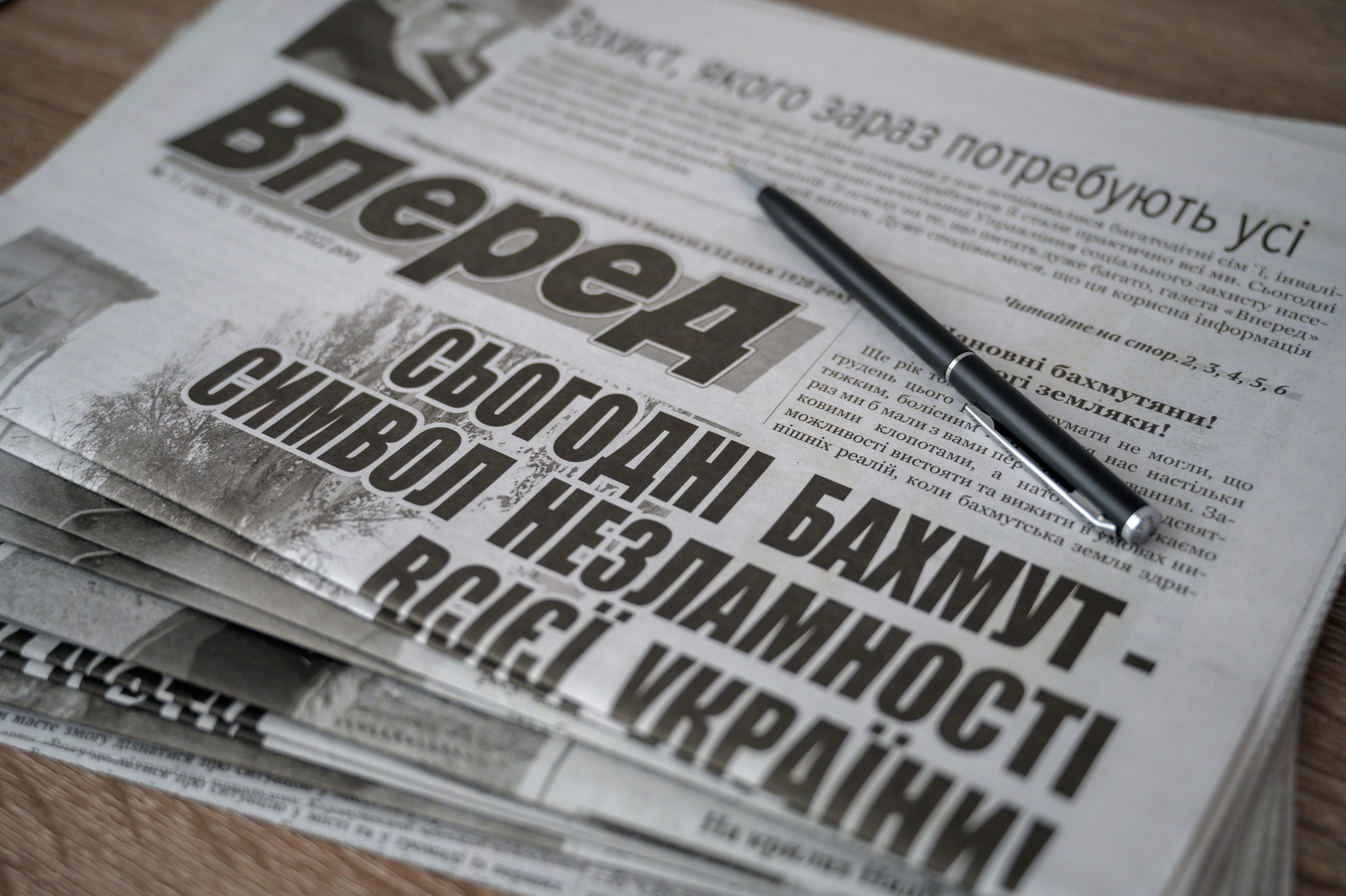
Vpered: The Newspaper is our Front and our Contribution to Victory

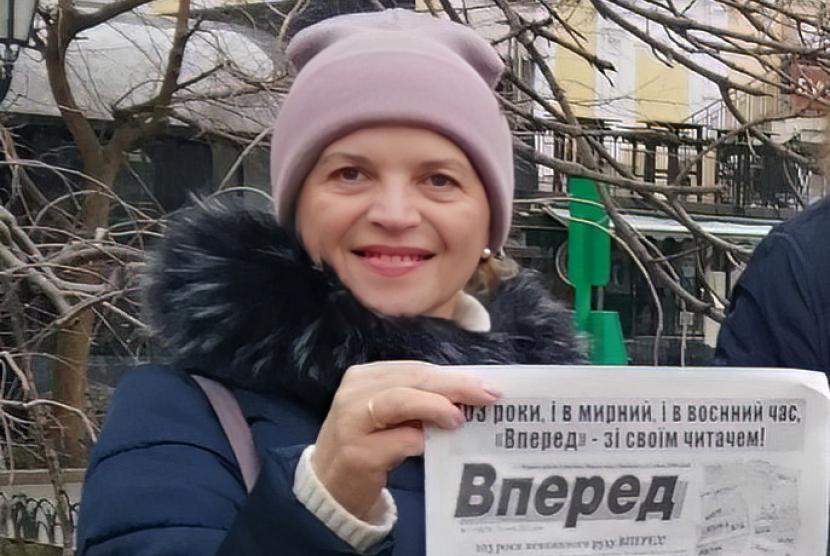
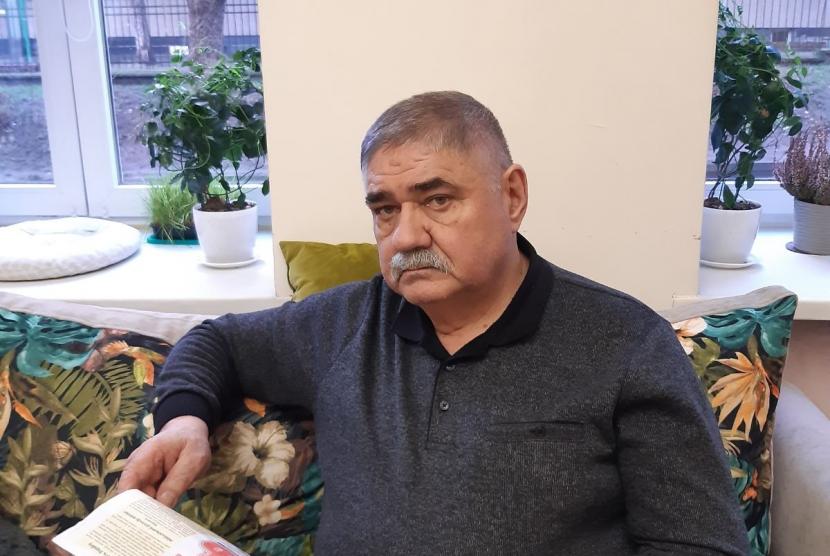
It is not only food, electricity and medicine that the people living through difficult war conditions are experiencing shortage of. Information is also in short supply. Svitlana Ovcharenko, Editor- in-Chief of the Vpered Bakhmut-based newspaper, did the impossible to get Bakhmut residents to start receiving the newspaper again. Here is an interview with Svitlana as part of the project to support the sustainability of Ukrainian media.

– Bakhmut. What information about the city are the Ukrainians missing?
– Now Bakhmut is the centrepiece of almost all news, TV stories, front pages not only of Ukrainian, but also of world magazines. It has become a place of pilgrimage for journalists from all over the world, and a lot has been said about its life from TV screens, radio stations and various level newspapers. The information has been coming from various sources: from Ukraine’s President to a random elderly lady from Bakhmut. Therefore, I believe there is enough information for society to realize that our heroic city, at the cost of many lives, is now fighting not only for Ukraine, but for the whole of Europe.

– What do your readers need most these days?
– It’s just the opposite here. The world knows almost everything about Bakhmut, whereas Bakhmutians are in a desperate need of information. That’s where we are supposed to step in.

When heavy fighting began near the city, there was neither electricity, nor mobile communications/Internet signal, when people who remained in Bakhmut found themselves in a complete information vacuum, the only source of information for them could only be a newspaper. Only the newspaper could lay out important and reliable information about the situation countrywide and locally, and most importantly, about the possibility of evacuation and receiving free shelter, medical support and humanitarian assistance.

On November 4, the first Vpered issue, after a long eight months of forced interruption, was delivered to Bakhmut with the help of volunteers and local authorities and distributed to those who are remaining in the epicentre of the fighting, our exhausted Bakhmutians who are staying in basements and have no idea what is happening around them. You can’t imagine how hectic it is there now.

The Union of journalists of Ukraine and their Japanese partners helped us print the first issue of the newspaper. By the end of last year, four more issues were published and two more were published in January. This is largely due to the project ‘Improving the Sustainability of Ukrainian Media’ that the Institute of Regional Media and Information together is implementing together with the Swiss-based organization Media for Peace and Human Dignity.

When volunteers tell us how people cry when they pick up a newspaper in Bakhmut under merciless shelling, it is clear to us – that is our front and our contribution to the victory. Only thanks to Vpered did Bakhmut residents learn that they were not abandoned or forgotten, that the whole world is now standing with them, that the President mentions Bakhmut in almost each of his addresses …

– How is the editorial office of your publication working now?
– We have been facing major economic and organizational challenges. The team was scattered all over Ukraine. But we managed to get out of this spin and learn how to work in war conditions. The team will eventually be in place. We get information, write stories, do the lay out, and printing – all remotely. In conditions of constant blackouts one often has to work nights. Especially when it is about the layout. The layout designer and I are based in different cities. When the power is on in my city, it is off in his and vice versa. Often during the day there is a couple of matching hours a couple of times for us. We are constantly in touch, set alarms for both two in the morning and four in the morning to do our work, because we know that our readers that are now in need for unbiased accurate information more than ever are waiting for their copy of the newspaper. We must send the newspaper to the printing house on time, so as not to break the chain by which it is delivered to Bakhmut. The chain was extremely difficult to build. But that’s another story.

– What kind of support for your project do you expect in the first place?
– The funds, of course, are very important. It is no secret that a newspaper can only make itself sustainable by good sales and solid advertising. Before the war, we were firmly on our feet, had a robust circulation and never received any subsidies. We are now distributing the newspaper in Bakhmut and it’s free for the readers, of course. So, what kind of advertising could we be talking about?

The project for us is primarily an opportunity to get out of our comfort zone, learn, by communicating with colleagues and mentors of the project, on new approaches in modern journalism and on the tools that will enhance our multimedia component, expand the audience and newspaper’s credibility as a reliable source of information. At this stage, for example, we are rebuilding our website and setting up our page on social media. Before the war, our newsroom published two newspapers: the 24-page Vpered and the 16-page Pohliad. It was quite an intense job to do for four journalists, and there was simply not enough time for the web site and social media. Now we still want, so to speak, to catch up on things. We have high hopes for the project in this regard.

The Novyi Den: Kherson Hurts

We will be telling you about publications that have joined the media support project that is being implemented by IRMI in partnership with a Swiss non-profit organization Fondation Hirondelle, funded by Swiss Solidarity. How do our colleagues work under severe military conditions? Is it possible to save the editorial office, resume work, and ensure the journalists’ safety?

We are offering an interview with Anatoly Zhupyna, who has been Editor– in-Chief of The Novy Den independent newspaper of Kherson Oblast since February 1996. At the time of Russia’s full-scale offensive on Ukraine, he was in Kherson, lived under occupation for a month, saving, where possible, the documentation and newsroom’s property. In late March, after reports that rashists had come to get the Editor, I had to leave urgently, risking my life.

– In September, there was information that the publication is resuming its work in a new format. Did you manage to do this?

– The transition to the new format began a little earlier, back in early May. Having left occupied Kherson for Lviv and adapted a little, we immediately began to think about how to work further. We received major support from Lviv Media Solidarity Center under the auspices of the National Journalists’ Union of Ukraine: we were suggested a direction, also, where, and how to look for funds, and learned how to write project papers. Let alone moral support! So, we contacted the employees of our editorial office, who were scattered all over Ukraine, and those who remained in occupation. It was clear to all of us that people needed reliable information. To begin with, we decided to restart our electronic publication. We created a Facebook page and a Telegram channel. The updated NewDay ua logo was supplemented with the slogan: “What is your pain? Kherson is my pain.” Regional news has become a priority for us. But while the Kherson Oblast was in occupation, for obvious reasons, going print was out of the question.

When Kherson was liberated on November 11, we began considering the newspapers’ re-establishment. On November 17, supported by the National Journalists’ Union of Ukraine and its international partners, the first special issue was released. The main topics the issue covered were the de – occupation of Kherson, President Zelensky’s arrival, humanitarian aid, the re-opening of post offices, banks, local mobile networks resuming coverage, and so on. The newspaper’s content was upbeat and optimistic. It was clear to everyone, though, – the rashists would not leave us alone, they would be taking revenge. And so it turned out.

Between The Novy Den first and second special issues, much has changed in the liberated Right-Bank Kherson area: the enemy from the Left Bank was shelling the cities and villages mercilessly, hitting residential buildings, infrastructure facilities, hospitals, schools, humanitarian aid delivery points… Because of this, many people who had survived the occupation left the city. Fortunately, due conditions had been established to make this a reality.

Bringing the publication back to life into the current format – newspaper, website, Facebook page, and a Telegram channel – was possible due to the financial support of Ukraine’s National Union of Journalists and its international partners. We would like to thank the International Institute of Regional Media and information (IRMI) for supporting the activities of our team.

The third issue is now getting into print. I look forward to the day when we can run the word “Victory” in a large font on our title page!

– Is it possible to receive feedback from your audience?

– Of course, we are inspired by our readers who constantly give feedback: in writing, by phone, or by leaving their comments under the stories. My mobile number is in the newspaper for a reason – so that people could talk about their problems, and we could help them. The requests and queries were not long in coming. The telephone calls would come from the former Velykoaleksandrivsky (now Berislavsky) Raion, people asking for help to go to Ukraine’s Western Oblasts, to safer areas. The Kherson Oblast reported on possible collaboration of the former hromada head with the occupiers. People are mostly concerned about everyday problems, humanitarian aid, medical and pension provision, etc.

– How do you get information for your stories?

– The journalists that remained in the occupied area reported on the situation on the ground. Partly in the absence of a stable connection and with a risk to life. In order to send out information, they had to travel a considerable distance in search of stable signal. At the same time, the issue of conspiracy remained important both for the journalists and for their informants, because neglecting it costs lives.
After the liberation of the right-bank Kherson Oblast, it became easier to receive information from there. Journalists are freer in their movements, although under explosions, when they need to work on a story.

We also maintain close ties with the Kherson communities formed in Lviv, Ivano-Frankivsk, Vinnytsia, etc. We are getting interesting bits of information on how IDPs are coping, the assistance they provide to the Armed Forces of Ukraine and residents of the de-occupied areas of the Kherson Oblast.

– What kind of content do you find to be the most relevant today for Kherson and beyond?

– Today the Kherson Oblast is undergoing particularly difficult times. It so happened that the Right Bank of the Oblast has been liberated, constantly suffering from crushing enemy attacks, though. The Left Bank is still under rashists unbearable yoke. Different life circumstances are also dictating the different topics that people are interested in. On the liberated land one needs information about humanitarian aid, evacuation, state aid and volunteers, healthcare, pensions, and building materials.

While on the Left Bank, people have completely different pain: pressure from the invaders, deportation, children being removed under the guise of rehabilitation, civilians being abducted and murdered, partisan movement, forced business acquisition, and the prospects of liberation. Our main task is to provide reliable information to Dnieper’s both banks.

We also know that our audience is scattered far beyond the borders of the Kherson Oblast and Ukraine. These are citizens of Ukraine who fled the war and compassionate foreigners. They need to receive information from the occupied and liberated South too.

– What tasks are awaiting the editorial staff soon? What kind of support are you expecting the Project to grant you? What are the most important things?

– Our daily current affairs updates are available on our website (www.newdayua.net), on our Facebook page and Telegram channel. The special print issues contain information that would not lose its relevance over a longer period: interviews, analytics, useful contacts and tips, etc. The geography of the publication matters to us, so that content is not only Kherson-centered. We keep in mind the occupied Left Bank too. People, when they have been liberated, will see that all this time their issues were covered, they were never forgotten.

The Kherson office used to have all the necessary materials and equipment and a large team of professionals. In a new place and under new circumstances, I had to start from scratch. So, it was only for the financial and technical support of committed colleagues, partners, and donors that made it possible for us to stay afloat and re-establish ourselves.

This project makes it possible to purchase much-needed equipment for work, meeting the basic needs of the editorial staff for consumables, also, enabling us to engage with more journalists, giving them better fees, and expand the geography of business trips.

To us the most important thing is the re-establishment of a stable and regular Novy Den print version. Unfortunately, the full-fledged work of the editorial office is impossible without donor support, as subscriptions and advertising do not suffice. However, the audience’s need for the printed word is huge. In the Kherson Oblast, as you know, there are electricity problems, internet, and mobile signal issues, and therefore access to information is hampered. People rejoice at receiving their beloved newspaper – as they would at a breath of fresh air. The newspaper is a symbol of freedom and indestructibility. Once a reader telephoned and said that when they were holding The Novy Den first special issue, the whole family was crying. The last time newspapers were published here was before the full-scale war…