Media Management, Social Research, SEO – Learning to Be Competitive

We do our best to ensure that our media management trainings provide answers to the fundamental questions media professionals have to ask; we offer tools that allow media professionals to build strategies, find new audiences, resources, partners to offer a better and more up-to-date news product. Five days of training in Lviv – this time with sociologists involved, together with Ukrainian and international media experts.

It is not just about audience research, it is about what the community thinks about social cohesion, about what unites or divides people. The training is part of the ‘Enhancing Media Resilience in Ukraine’ project, which IRMI has been implementing together with  Fondation Hirondelle with the financial support of Swiss Solidarity.

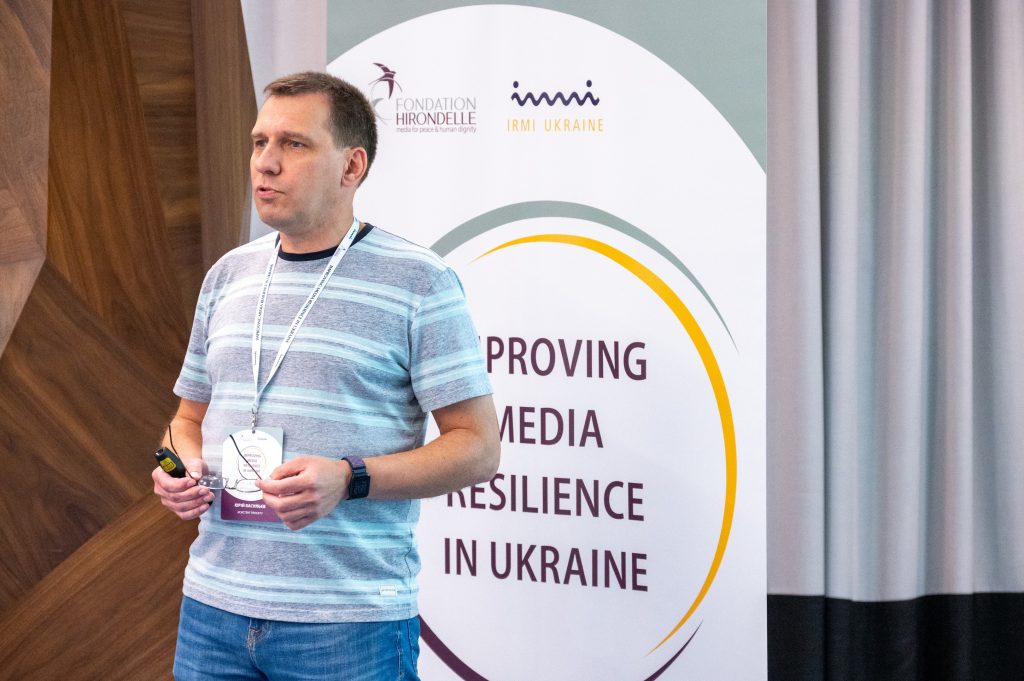
Determining the community’s priorities and needs, being in the loop, being in demand, being competitive are essential for the media. How to measure your audience needs, sentiments, be part of research, use sociological tools, and then make a good use of research findings is the subject matter of these training days. The trainees are editors and managers of the regional media that are part of the project – like no other understand how the success of a media outlet depends on an accurate understanding of the audience needs, especially in the matter that is most relevant to our society. Therefore, today we present the general findings of the first, qualitative stage of the research, we conducted in the hromadas where our grantees work. With the expert researcher, Ph.D. Alina Kalashnikova, we discuss the possibilities of using research, external and internal audiences, qualitative and quantitative methods, target audience, sampling, and more. And most importantly – how to research the hromadas scattered across Ukraine and abroad. We are generating questions for the next, quantitative stage of the research.

From the analysis of needs to the development of media strategies – this is how we will move throughout the training. So: can each editorial office afford a thorough training on legal principles of personnel management? The question is probably a rhetorical one. With this in mind, we invited Taras Boykovych, a lawyer and an IRMI expert, to conduct a public consultation for our partner media. Journalists were interested in personnel management, workflow organization, economic activities of the media and many other matters.

Taras Boykovych:

– Journalists, especially news organisations leadership, must be very well versed about legal regulations. Being knowledgeable about rights, managing the media competently, not to harm oneself and others, being able to professionally explain legal matters to readers is extremely important for the media. I believe Ukrainian media law is quite good, well adapted to international frameworks; the thing is just for it to be executed, to make it work, simply put.

Discussion of communication tools, editorial strategies that focus on greater audience engagement, productive public relations was facilitated by Angelina Soldatenko. The day ended on a team building note: emotionally, everyone supported Ukraine’s national team at Euro-2024 Ukraine vs Belgium match.

The quintessence of the next training day, SEO-related – from trainer and SEO expert Olga Odarchenko:

-SEO does not exist in isolation from content. It is a means of its delivery, which helps to create the content that the user needs. With regard to the demand in search engines, of course. But in fact, it’s all about content, not about search engines, but about the audience. The most common mistake of media professionals is that they want to do either everything or nothing pertaining SEO, although first you need to understand what the audience needs are and what exactly competitors are doing. There are also technical errors, there are no analysts, when the media do not track the consequences of what they do (or do not do). What would be the advice for beginners? Create your website. Focus on your audience, track feedback, reviews, views, analyze what is in demand to inform your agenda. Is it possible for local newsrooms to master SEO tools on their own and at a low cost? -Definitely yes. You don’t need to be a SEO guru to optimize your site and mind you readers interests. There are many examples known to us when the media have retained their audiences thanks to a competent SEO person. SEO also helps you make money.

MOJO in the Frame

Five days of professional work with framing techniques. MOJO training has kicked off in Lviv for media professionals participating in the ‘Strengthening Media Resilience in Ukraine’ project who have completed basic mojo training. Those who use MOJO practices in their daily work and view them as an integral part of the newsroom strategy were invited. By the way, we additionally purchased wireless microphone systems for four such newsrooms.

During these busy days, an international team of four trainers offered a course as hands on as it could get. From the analysis of common mistakes, we move on to mobile journalism skills polishing, which is in great demand with the newsrooms. We talk about professional camera apps, settings, shutter speed, White Balance, and ISO. We discuss the fundamental aspects of the work: how to shoot difficult interviews, faceless interviews, figuring out all the difficult aspects with the trainers on the spot. Is it easy to choose a shooting location? How do we control light, sound, frame, how to get short answers during an interview. What techniques can be used to shoot exciting videos and Vox Pops. We supplement day sessions practice with evening homework: how about storyboarding an evening in Lviv city.

MOJO techniques were practiced in the city with interesting topics and insightful soundbites. Here is a street musician playing a melody from Lviv. Here are students: what is their take on Lviv? How does a morning in Lviv start? Are there really acquaintances from Bohodukhiv walking down the street? Two-minute stories with ideas and reflections – it turns out that this time is enough to hear the people and the metropolis. The combination of curious ideas and professional approaches to video shooting and editing was discussed with the experts.

IRMI is implementor of ‘Strengthening Media Resilience in Ukraine’ project together with Fondation Hirondelle with the financial support of Swiss Solidarity.

Mobile Journalism: New Tools and Skills

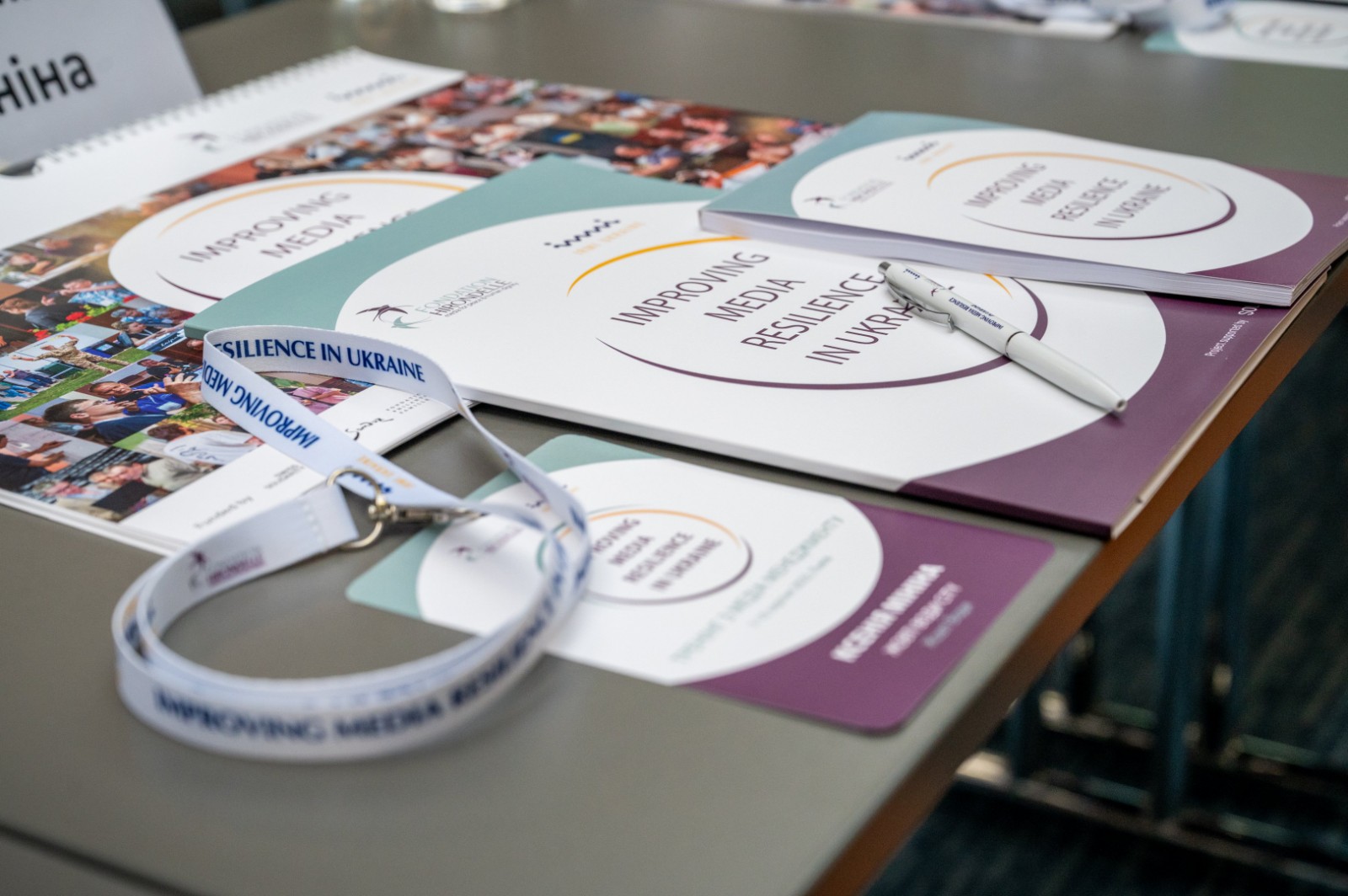
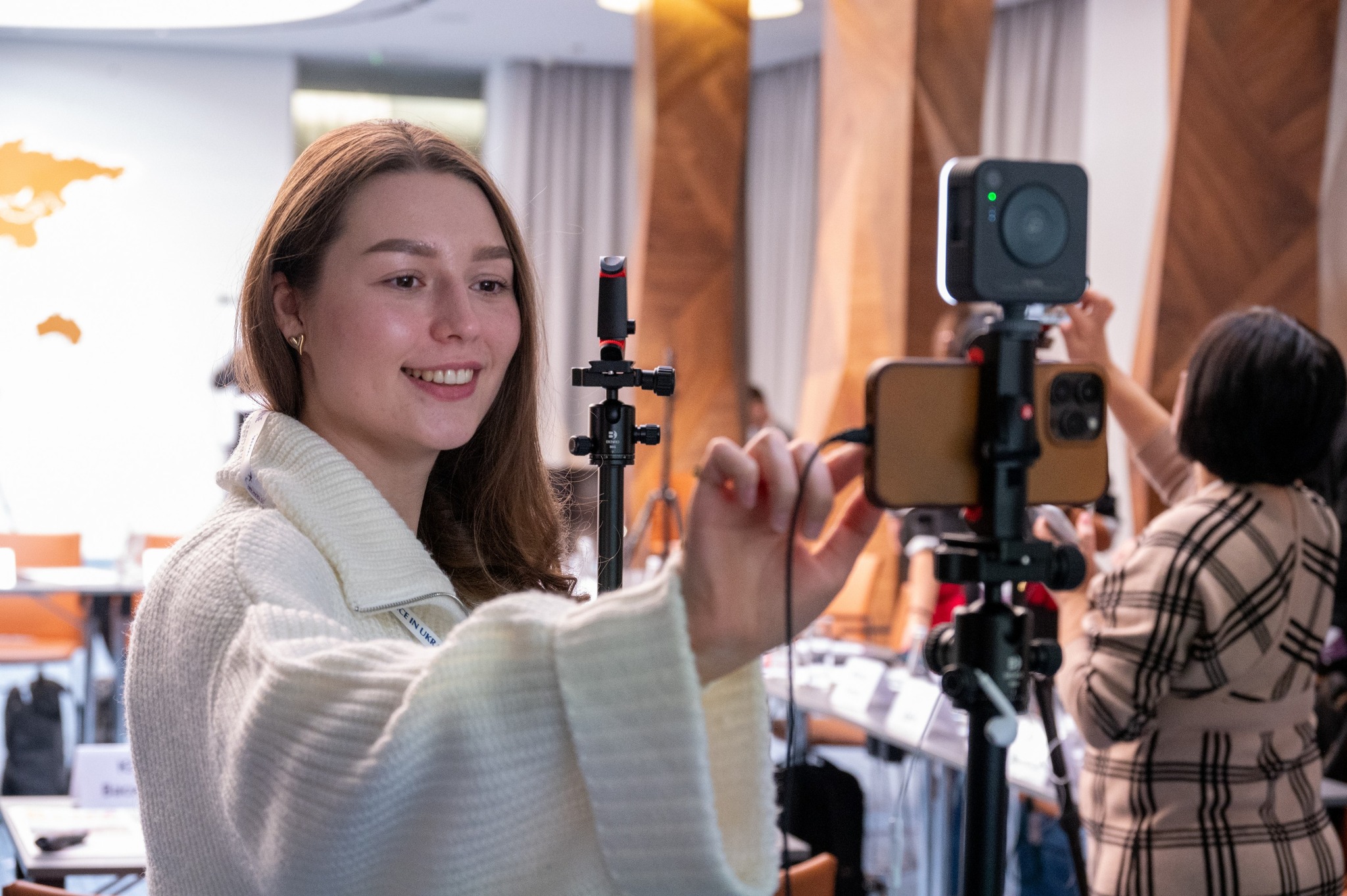
The participants of mobile journalism trainings will confirm that practice is an essential component of the training sessions. The new training kicked off with the participants familiarizing themselves with equipment to be used during the training days to follow: the attendees received sets of professional equipment with accessories for their editorial offices – modern smartphones, wireless microphone systems, LED lighting, tripods, and handy equipment bags. The training takes place as part of the ‘Strengthening Media Resilience in Ukraine’ project, implemented by IRMI together with Fondation Hirondelle with the financial support of Swiss Solidarity.

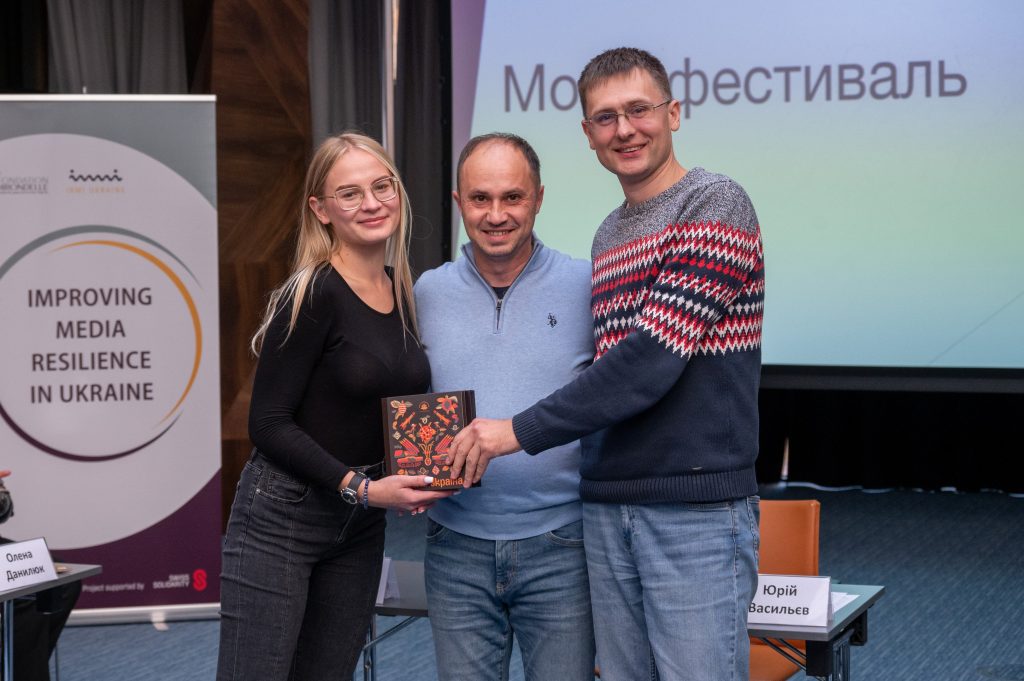
The participants set up the equipment, discussed and practiced the principles of shooting, the basics of framing, working with a tripod, light and microphone. We did a lot of practical exercises to practice editing, interview preparation, audio recordings and other skills. The last day was fully hands on, and the level of professionalism and journalistic skills of the group was highly appreciated by the trainers. The journalists chose the most relevant topics, including the one of social cohesion. We interviewed Lviv residents and IDPs – we even found compatriots from Izyum, Bakhmut, and Zaporizhzhia. We talked to experts. The protagonists were people of different ages, and they all spoke about social cohesion as a great value. The interviews grew into professional stories, as theirs authors worked not just to develop the topic, but also to build up their shooting, video and audio editing, and scriptwriting skills. The authors of the four best stories (selected by voting) received Lviv sweets – there is usually a mini festival at each training’s finale.

Mobile journalism offers tools that allow media professionals to get a new quality of the product, visualize stories and increase their credibility. Per the results of the training, experts believe that all participants are ready to use new skills in their daily work.

Media Management Training for New Project Participants

We have launched trainings for new project participants!

‘Strengthening Media Resilience in Ukraine’, which we have been implementing for several years in a row together with our partners – Fondation Hirondelle and with the financial support of Swiss Solidarity – has engaged with new editorial offices from Ukraine‘s east and center. So, these days we are conducting two several-day trainings for the ‘newcomers’ to start with media management.

We promise an intensive professional skills recharge with a lot of practical work, a highly interactive pastime with discussions and experience building. We are talking about effective management, target audiences and public interest. What are the skills that we need to develop? What is our unique product? Finding new forms of fundraising during the war is very important, so we discuss crowdfunding, grant writing, and donations. And tomorrow is a day to brainstorm ideas for strategic planning.

It is equally important to analyze the current state of things in newsrooms, identify weaknesses and threats in order to move on to the top priority – the development of new editorial strategies and approaches. Brainstorming is the best tool for this. Therefore, the groups ‘stormed’ on new media development ideas, search for resources, new audiences and their markets. They also talked about reputational risks for journalists and publications, editorial rules and values, performance evaluation, and incentive systems. How to maintain personal pages and blogs and use the power of social media. As a matter of fact, the ideas that we discussed at this training will be taken to the next one to start tomorrow. There is an equally exciting topic ahead – mobile journalism.

Oleksandr Kulbaka, Chief Editor of the ‘Vesti’ newspaper and journalist for ‘Karachun’ website:

– I liked the organic combination of theory and practice, the break-out sessions. Our group would seem to have offered everything. It turned out that others still had so much to add, though! But isn’t it obvious! There are so many people, so much experience, so I hope that at the next training one of my colleagues will share their successful management practices with the audience.

Yevhen Khrypun, Editor of the ‘Mezhivsky Meridian’ raion newspaper:

-The brainstorming was great. Thank you for the positive thinking tactics, we were just brought to the peak in this. Frankly, I look forward to the next meeting with colleagues and trainers, life exchange, new ideas and updates.

Insightful and Professional Coverage of War Crimes

How do we cover court cases related to war crimes? What experience has Ukraine accumulated so far, and what do foreign experts have to share? How do we build up our skills? How do we keep up with legal regulations? What are the tools for conducting investigations and searching for information? A three-day training was held in Kyiv,  conducted by JusticeInfo experts as part of the IRMI and Fondation Hirondelle project  ‘Strengthening Media Resilience in Ukraine’, funded by Swiss Solidarity.

“War crimes are what the country has been suffering from. What could be more relevant? The experts of the training are true specialists. A fully used up scrapbook, a lot of useful information that still needs to be analyzed.” “This is the first time I took part in such a training. This is a significant amount of knowledge, which I immediately shared with my colleagues. And this means that a new column will appear in our editorial office (we discussed this today during the editorial meeting).” That is the feedback from the journalists participating in our training on covering court cases related to war crimes. Every time we strive to ensure that media professionals specializing in covering war crimes receive comprehensive and thorough training, so we invite working journalists and editors with local and international experience, as well as representatives of the prosecutor’s office, judges, and human rights defenders as trainers. During these three days, we plan to discuss everything – from general concepts of a war crime, genocide and a crime against humanity, to sources and practices. The trainers offer to analyze common mistakes in crimes coverage and the ‘golden rules’ of an investigative journalist. There has always been great interest in such development trainings, also among the journalists and editorial offices that are not part of the project. So, early this year, IRMI, Fondation Hirondelle and Justice Info launched the first round of a mini-grant competition for reports covering court cases related to war crimes, as you may remember. The first ten awardees have been determined to participate in a several-day training on war crimes investigations, led by Ukrainian, international trainers, and legal professionals. Moreover, there is another round of the competition ahead. There will be trainings for ten more awardees, so we will be supporting you not only in financial, but also in professional terms.

Special CEI SEEMO Awards for Ukrainian Journalists

Congratulations to the winners of the CEI SEEMO competition! The established professional competition awards media professionals annually for outstanding achievements in investigative journalism, the awards are presented by the Central European Initiative (CEI) and the Media Organization of Southeast Europe Seemo Vienna. Ukrainian media workers received special awards.

The independent jury of the competition included journalists and experts from Albania, Romania, Croatia, the Czech Republic, Ukraine was represented by IRMI program director Oleksiy Soldatenko. This year journalists from Bosnia and Herzegovina became laureates, and Ukrainian journalists received special awards. Taras Zozulinskyi, chairman of the board of the Bureau of journalistic investigations “Detectives”, was awarded for his extensive journalistic work in documenting war crimes during the Russian aggression in Ukraine in cooperation with several mass media and human rights organizations. The Slidstvo.info team received high praise for its highly professional work on exposing corruption in Ukraine, which resulted in several outstanding investigative documentaries.

The award ceremony was held on November 14, 2023, during the Southeast Europe Media Forum in Turin (Albania).

The CEI SEEMO Award was established to honor the work of investigative journalists and their contribution to investigative journalism, despite the often complex operational environment. The award ceremony was organized in cooperation with the Southeast European Media Organization (SEEMO) and the Central European Initiative (CEI).

Photo by SEEMO.

Media Resilience: Sharing Experiences at Donbas Media Forum 2023

Our philosophy and practice of supporting the media since the beginning of the invasion was discussed during the session “Resilience of the Ukrainian Media in Wartime: Ways to Adapt the Business Model” at the landmark journalistic event of the year – Donbas Media Forum 2023. An international conference that annually gathers journalists and media managers from Ukraine and abroad.

«Our goal is not only to preserve regional media, but also to ensure their sustainability after the victory,” said Oleksiy Soldatenko, IRMI’s program director. – To win not only the war, but also the post-war peace. This underpinned the project “Improving Media Resilience in Ukraine”, which we are implementing in partnership with Fondation Hirondelle with the financial support of Swiss Solidarity. We are sure that no matter what business model the media decides to go for, sustainability and independence are impossible without a high-quality, up-to-date information product. The project offered not only funds, but also training on the most pressing issues of the media business, tools for audience research, working with sources, managing multimedia newsrooms, mentoring, consulting, and preparation for JTI certification. This way increases the trust in the media not only of readers, viewers, listeners, but also of donors, partners, advertisers, which would contribute to better monetization of publications».

The forum is a chance to discuss current issues of the media market. To meet old friends, for whom today it is not so easy to leave their newsrooms even for two days to come to Kyiv. Establish new contacts, offer ideas for preservation and development. Thanks also to RSF for the professional moderation of the session in which we participated.

A Call for a New Media Development Project

We are launching a new one-year project, which aims to improve access to information through the support of Ukrainian regional media. It will be implemented by IRMI in partnership with Fondation Hirondelle (Switzerland) and with financial support from Swiss Solidarity and is the next phase of our previous program which ran from April 2022 to October 2023.

The new project, like the previous one, provides for multi-level media support. Namely: trainings on how to work under martial law, ensuring the public interest is factored in, facoring in the peculiarities of information sources, professional norms and tools for the investigation of war crimes, mobile journalism, media management and other topics. It will be of particular interest to editors who address the topics of social cohesion, seek to study their own audiences and to improve communication with them.

Consultations on urgent issues, mentoring and ad-hoc support are also provided. Project participants will also receive assistance in preparing for international media certification (this component is implemented in partnership with the Journalism Trust Initiative and under the leadership of Reporters Without Borders). And also – mini-grants for institutional development.

Trainers, mentors and consultants of the project are foreign and Ukrainian media experts who have experience in the mentioned topics and problems.

18 Ukrainian mass media will be selected to participate in the project on a competitive basis. Priority is given to the regional media of the South, North and East of Ukraine, which need comprehensive support.

Eligibility criteria:

– regional, local and hyperlocal media officially registered in Ukraine (priority is given to media from the East, South and North of Ukraine);

– motivated towards development, interested in the topic and direction of the project;

– media that do not have other significant institutional grant support.

A completed form, which includes a motivation letter, should be sent at the link below. The deadline for submitting applications is November 13, 2023.

Successful applicants will be informed by November 22, 2023. Project updates are posted on our FB page just as new media support efforts during these difficult times.

MOJO 2.0

What problems do editors encounter mastering Mojo? What has been achieved over the set timeframe, what challenges have arisen? Are we fully utilizing Mojo to create cool, professional videos? Second-level training for representatives of regional publications participating in the project “Improving media resilience in Ukraine” was held in Lviv.

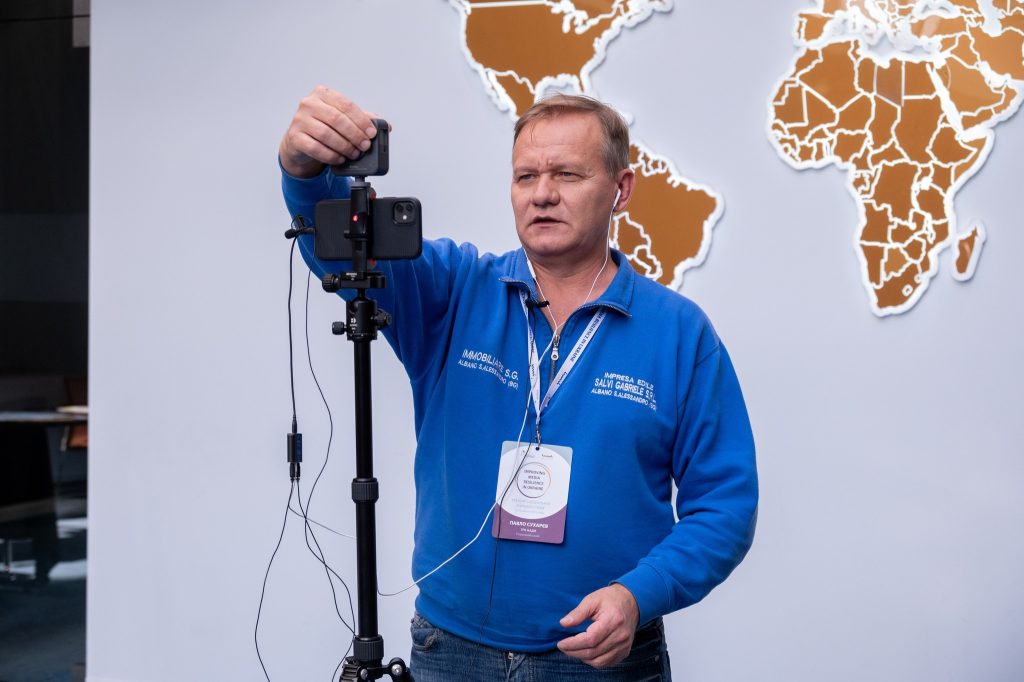
For some time, after the Mojo training in June, the newsrooms have been mastering new video production skills. The equipment that the trainees received as part of the project was being used for that. And so the trainees re-convened for another worshop to “work at mistakes”. In a participant survey the trainees reported certain difficulties in using a tripod, a microphone, during editing, framing, voicing, and others. So, these three days are both work on errors and development of new skills, covering Mojo subtleties. They ususally ask to switch off mobile phones at trainings, during these three days, though, the smartphone was the main tool, it was by using their smartphones that the participants masterfully and professionally prepared video stories – from gathering material to meticulous editing. The particpants practiced shooting pieces to camera, putting togethr leads, blitz interviews, and doing quick editing. Trainers provided a thorough “debriefing” and detailed discussion of the stories that the participants worked on.

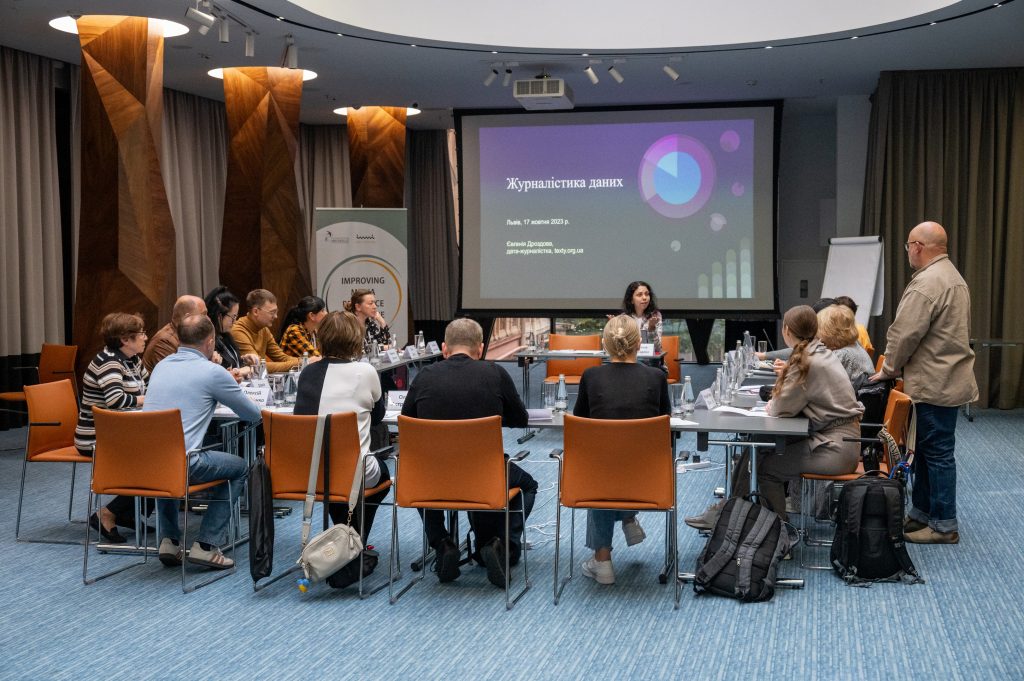
Data visualization and data journalism are a separate essential strand. The main principles, data preparation and online tools were discussed and practiced with Yevhenia Drozdova, an expert, a data journalist and head of the data journalism department at Texty.org.ua. “Data journalism is not some other kind of journalism,” commented Yevhenia Drozdova. – It has the same goal – to inform people about what is happening in the world and around them. However, if our world is becoming more complex and saturated with information every day, journalism must respond to this challenge. So the development of journalism in the direction of processing considerable volumes of data is quite natural, just like the emergence of television and video journalism. Today, we should be actively talking about the use of AI and machine learning in journalism. And it’s not about generating content using ChatGPT, but about journalists understanding what modern data processing and analysis tools can be useful and are necessary for creating more insightful content. Data analysis can help identify trends that are not obvious at a cursory glance, as well as pick out pitfalls that require public attention.”

– In this project, there is an apt combination of very professional trainers and the team of journalists, – believes Pavlo Sukharev, director of “Nadia” broadcasting station. – Everything was valuable: discussions, practical tasks, experience exchange, creating a team that went through more than one training together. It’s cool to communicate with talented young people. During the war, our country became more polarised, so our task is to “stitch” it, both geographically and mentally. We can do it.

In our communication during the training, we heard a melody consisting of smiles, humor, friendly advice and practice – it turns out to be very atmospheric and exciting. This is our MOJO training for journalists – people who really missed not only professional training, but also communication outside the newsroom and beyond their everyday problems.

The training was part of ‘Improving Media Resilience in Ukraine’ project implemented by IRMI together with Fondation Hirondelle and financed by Swiss Solidarity.

September Training for the Youth: from Basic Knowledge to Professional Subtleties

What did you remember this September by? Not just by content training for “media whales” in Kyiv. During the month young colleagues of our partner publications participated in a webinar – professional training as part of “Improving the Resilience of Ukrainian Media”. They defined the main tools and work norms of journalists, discussed the ethics of the profession, work with information, and much more. The trainer was Vivienne Marsh, an international expert, TV and radio journalist, researcher and university lecturer in media and journalism.

Such long-term “stream training” was organized for young journalists at the request of their editors who wanted to find development opportunities for their young colleagues. The objective problem of local publications is brain drain: staff have resigned, relocated or gone to war. The teams of most local newspapers, in the best case, would consist of two or three journalists, including an Editor who deals with every day operational matters and also fills the columns. Replenishment is always welcome, especially with young reporters with a fresh perspective, interest in the profession, and willingness to learn. But do they always have enough basic knowledge and practical skills…

So, they talked about ethics in journalism, public interest and credibility. Is censorship unacceptable or sometimes necessary? The discussion was of legal risks, danger of defamation, privacy and copyright. How to define news, separate facts from comments. It was about how to prepare news stories, check facts, in particular, from social media, and what tools a journalist has for this. How to prepare for an interview, ask questions, work with quotes or reported speech.

“There was a lot of discussion about verification, methods of checking facts in social media. This is not surprising given the urgent need to debunk fake news. Each trainee was also analyzed individually for their media materials. I am highly satisfied with the approaches to covering the topics. But the lack of resources and time are the most serious issues of editorial offices: the material collected via messenger or by phone will never be as complete as during the field work. Another important issue was the use of “overloaded” language; the participants recognized impartiality as an ideal principle, but made it clear that it is impossible to implement it in their editorial offices today,” commented Vivien Marsh on the work with the representatives of the editorial offices.

Here is the feedback of the trainees following the training.

“The basic journalism course was extremely useful for me, even though I had no experience in this sphere. Vivienne, our trainer, explained the material perfectly well, was always ready to answer any questions, and thanks to her, even my understanding of the English language improved. There was never a dull moment.”

“It turns out that not only practice is important in journalism, but also theory. I would really like to see this course extended, or make several separate modules about some psychological aspects in journalism. For example, when an interviewee is aggressive, behaves inappropriately, argues, provokes you, is critical. What do we do when the speaker declines to comment. How do we find common ground?”

“I would love more practical tasks, as well as more team-work. Thank you very much for the course!”

“There is a lot of information, interesting and somewhat new. I would like more experience, how exactly journalists work in other countries.”

The training was part of ‘Improving Media Resilience in Ukraine’ project implemented by IRMI together with Fondation Hirondelle and financed by Swiss Solidarity.