

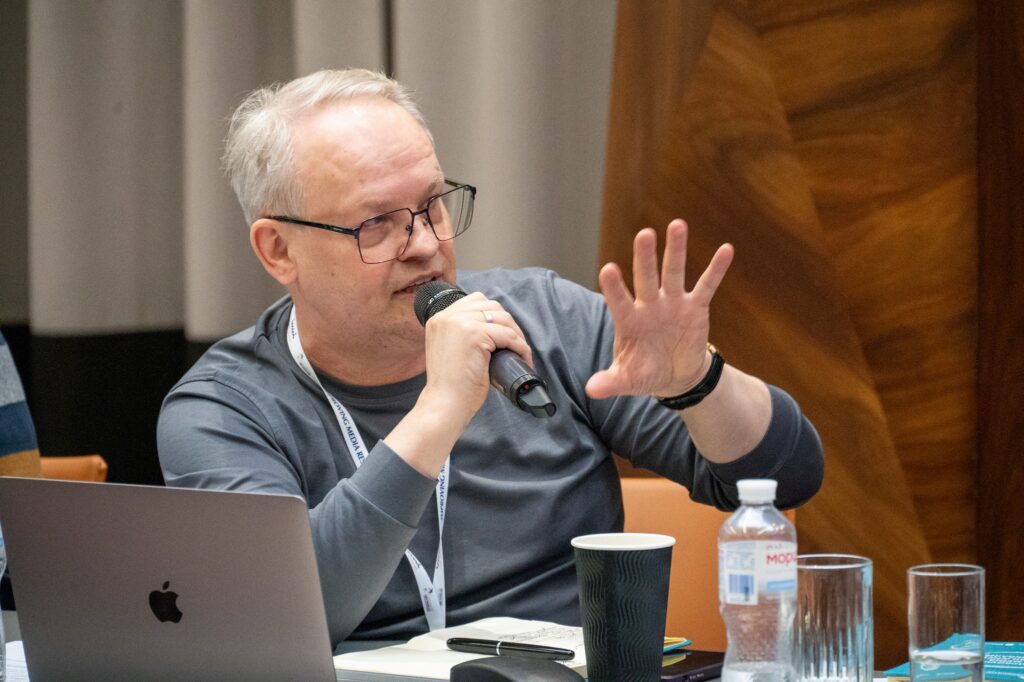
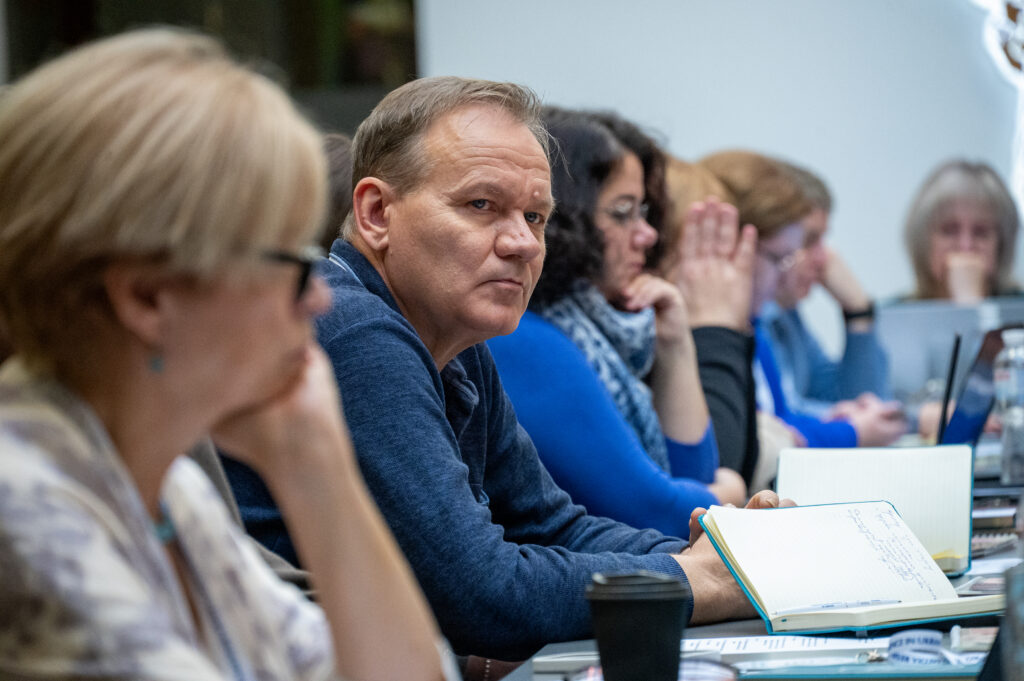
How to maintain balance, how to work in a conflict situation, under wartime conditions. How to cover war crimes professionally. How to work with sociological research. These and much else — everything bearing on the subject — were on the agenda at a training course in public interest journalism.
The topic is a demanding one. We spoke about human rights, the interests of society, and professional journalism as it ought to be practised. Every participant — representatives of regional media outlets — already brought experience of their own, but also professional questions they wanted to put to specialists. Case studies and practical exercises grounded in real situations helped sharpen understanding still further.
Mykhailo Buromensky, a lawyer and expert contributor, observed that the training had engaged with questions of fundamental importance for journalists working in conditions of conflict of interest. The capacity to identify the public interest and to strike the right balance is, in effect, what enables journalism to fulfil its mission. Particularly significant, he noted, was the discussion of journalism’s role in documenting Russian war crimes in the war against Ukraine, and of the ethics of documentation — which differs in certain respects from standard investigative practice.
With sociologist Olesia Hudzenko, participants considered whether we use and interpret the findings of sociological research accurately and responsibly — how to avoid manipulation, and how to assess the credibility of studies produced by different polling organisations.
The theme of public interest journalism draws together a range of important skills and ideas. With trainer Olha Odarchenko, for instance, the group explored the use of Google Analytics — a tool that deepens understanding of audiences and their needs and, from that foundation, enables the development of sound content strategies and the identification of subjects readers and viewers actually want.
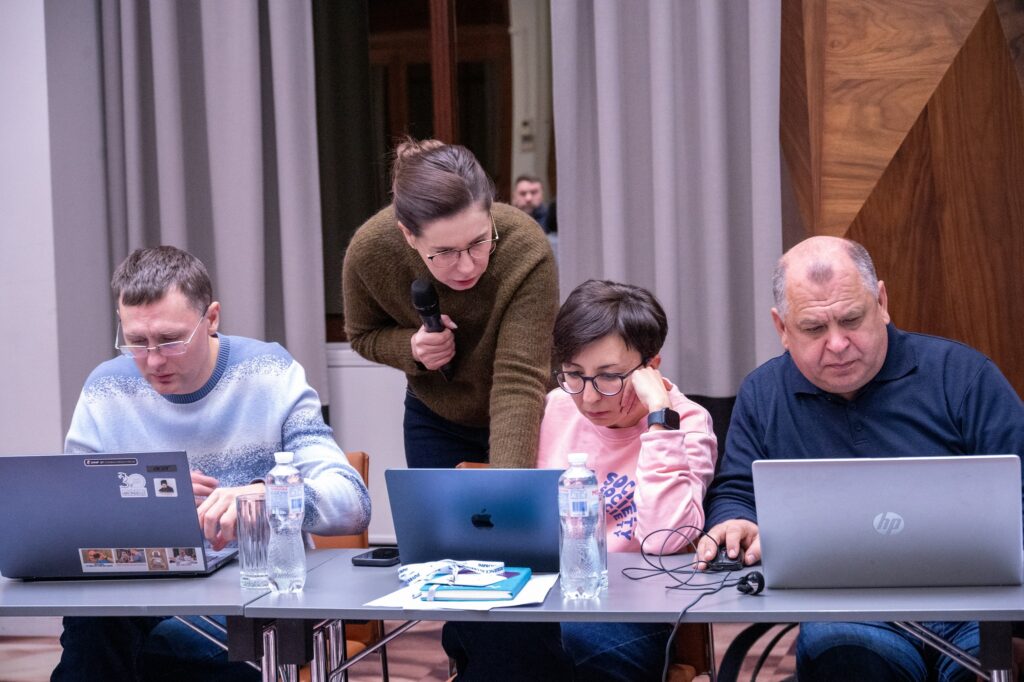
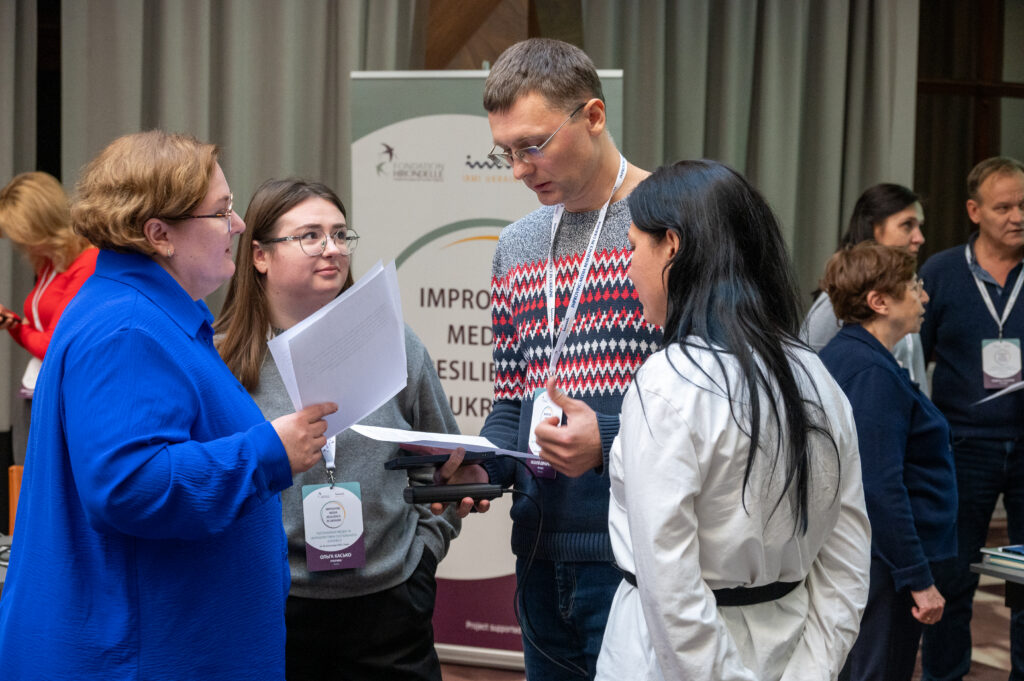
Practical exercises, discussion, and debate made up a substantial part of the course. Indeed, on one afternoon the journalists themselves became the speakers, sharing editorial experience from their own newsrooms: how they engage with their audiences and handle the question of inclusion; how to monetise social media; public interest journalism and the coverage of environmental problems; and co-production — the practice of collaboration between editorial teams.
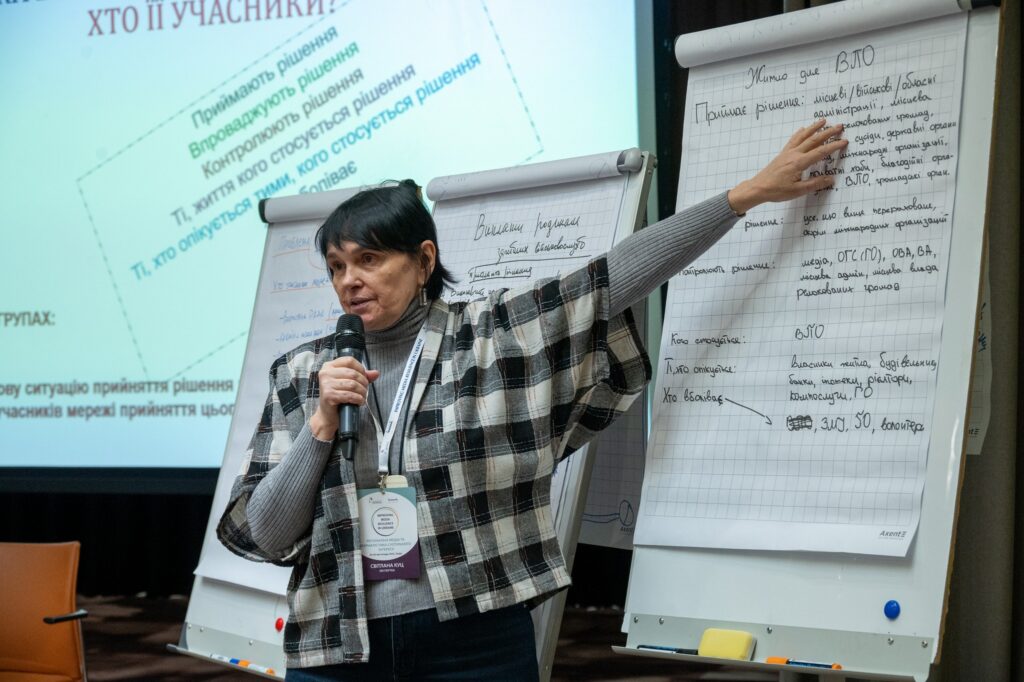
With expert Svitlana Kuts, participants worked through how to avoid becoming an instrument of manipulation, and also when media advocacy genuinely serves the public interest. This critically important theme — like all the others — was reinforced through hands-on work. In a brainstorming session, groups developed strategies, identified new angles, and searched for subjects connected to the public interest.
The training concluded with a visit to Lerane Khaibullaieva — a Crimean Tatar journalist, now living in Lviv, who has been forced to relocate twice. She has settled here and opened a café called The Crimean Courtyard. Her accounts of the history and traditions of the Crimean Tatar people captivate visitors no less than the food does. She still starts her day with a cup of coffee — and dreams of the day she will be able to drink it at home, in a Crimea that will one day be free.
Natalia Popovych, Horodok TRPC:
“From every day of the training I took away something practical and useful. How to read sociological research properly, for instance — I went back and completely reviewed the results of our own survey from last year. And I’ve started to understand my reader far better. I also now know what I want to write about next, because there genuinely was that feeling: what subjects are there still left to explore at a local level? Now I have a new list. This is development in every sense of the word.”
Tetiana Luchynska, Maiak-Media, Bohodukhiv:
“Before we came to know IRMI, we had no website and no social media presence worth speaking of. We had Facebook, yes, but we had no idea it could be monetised, that concepts like analytics and public interest journalism even existed. Over the past few years we haven’t merely grown in financial terms — which matters enormously — we’ve developed as a media outlet. You can feel it in how people come to us, trust us, value what we do. That is precisely the resilience we keep talking about.”
Maryna Osypova, Visnyk Ch, Chernihiv:
“Personally, I have grown enormously — I’m practically two different people now. As is the outlet: the print newspaper Visnyk Ch and the multimedia Visnyk Ch that exists today are two quite different things. And all of it began with IRMI. As for the current training — every session was valuable, but the one with Svitlana Kuts was something altogether different: a genuinely remarkable, unconventional way of teaching that completely overturned my assumptions. I’ve noted down the topics we covered, and we’ll be discussing them in the newsroom in December.”
The training was held as part of the Improving Media Resilience in Ukraine Project, implemented by Fondation Hirondelle (Switzerland) and IRMI, Institute for Regional Media and Information (Ukraine), and funded by Swiss Solidarity.