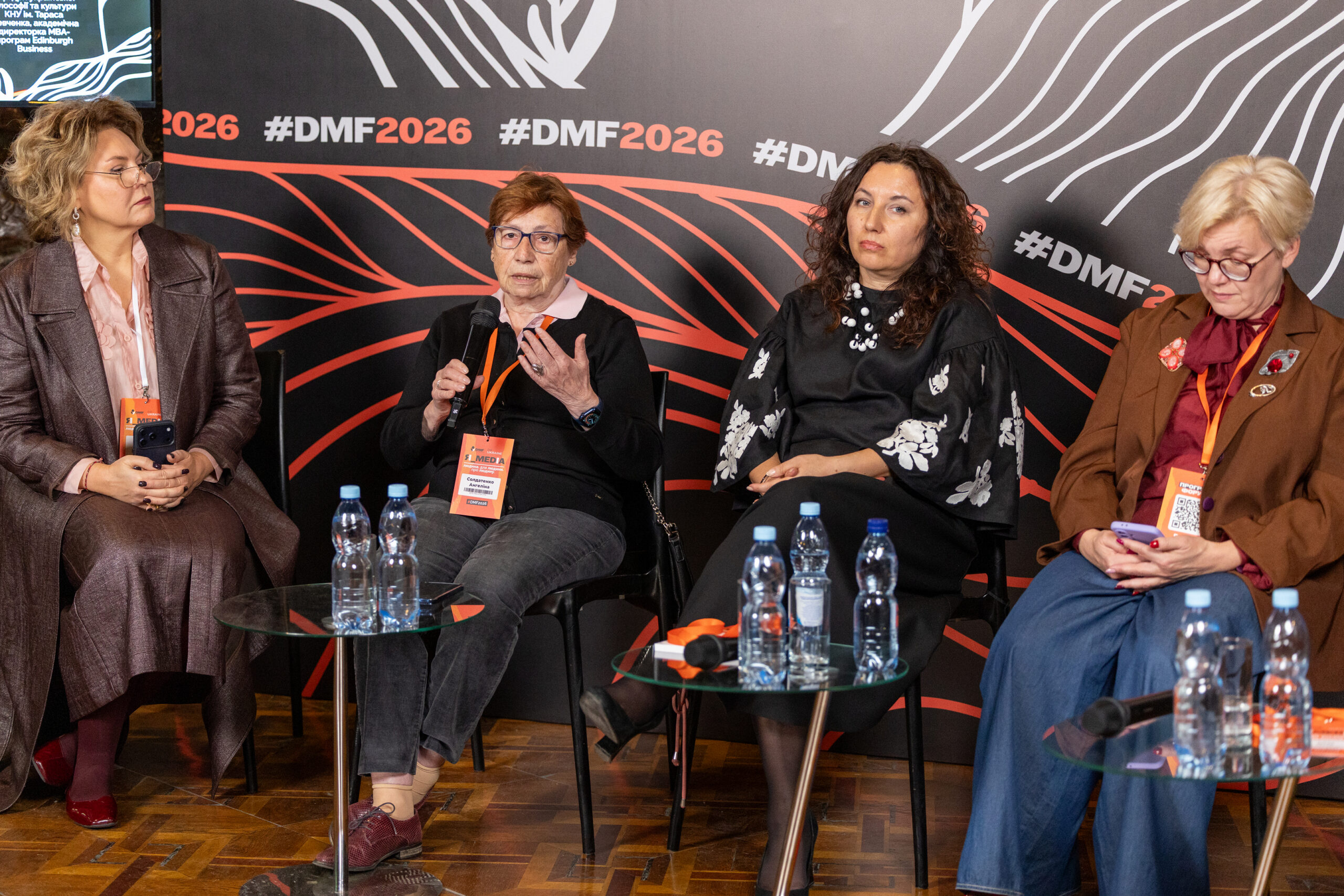


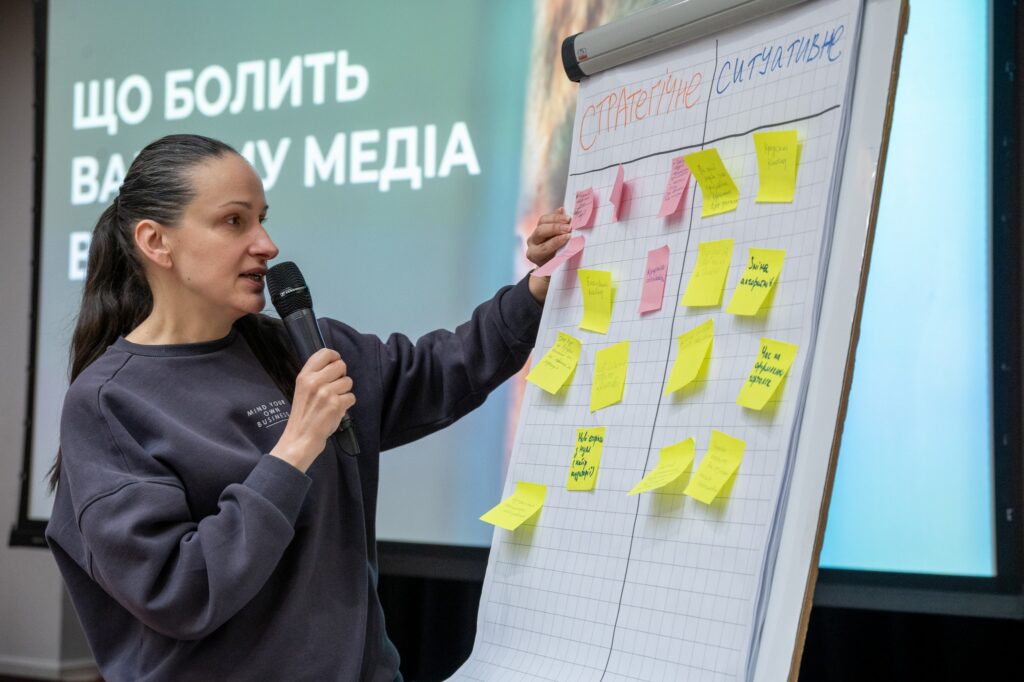
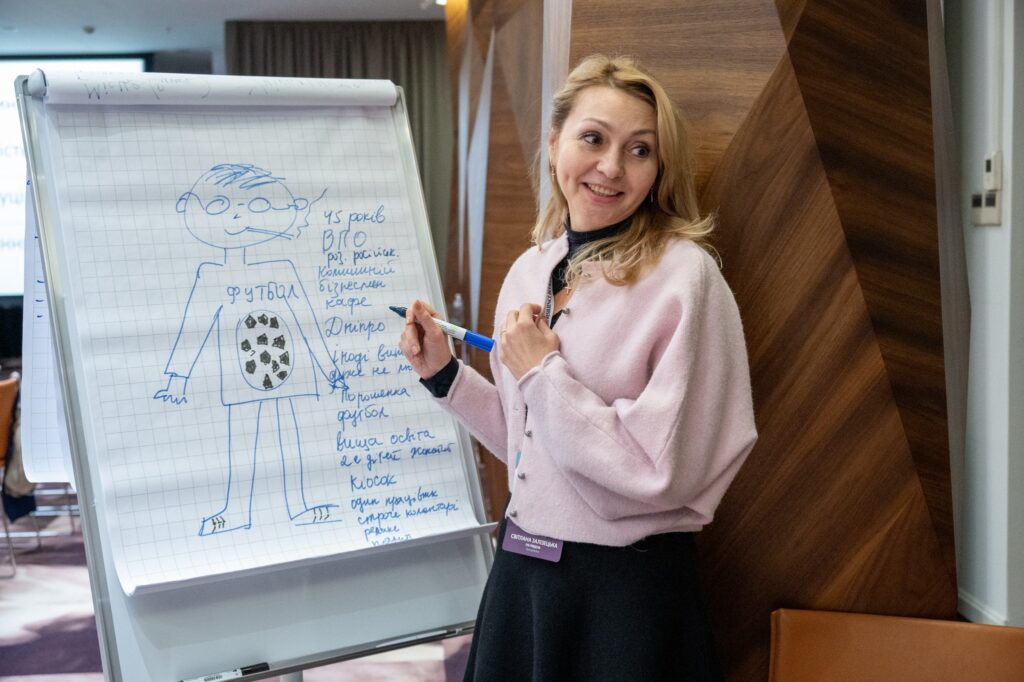
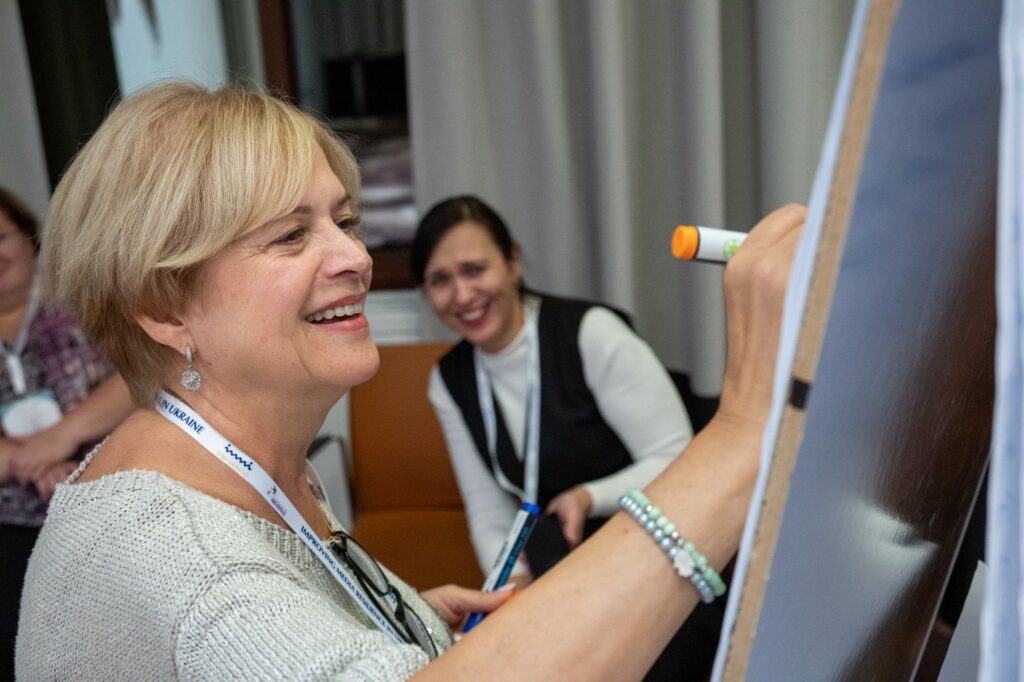
What are we missing, and what tools do we actually have when we sit down to draw up a media strategy? During a training for the ten editorial teams receiving institutional support under the project, participants developed strategies for the coming year and beyond — as far ahead as circumstances allow. They refined plans already in place, shared experience generously with colleagues, explored new approaches and instruments, and subjected them to robust discussion.
What do our audiences look like today, and how do they affect media sustainability — how do they determine a newsroom’s prospects? What does it take to evaluate a strategic plan properly, what needs to change, and what tools might usefully supplement the familiar ones? The conversation focused on attracting new audiences through higher-quality content, on monetising social media, and on rethinking the underlying principles and approaches to strategic planning. Journalists analysed the particular characteristics of their readerships and shared working methods suited to conditions of instability. Experts addressed not only the risks but also the practical means of overcoming them. All the editorial teams agreed that media sustainability depends on expanding audiences, winning their trust, and raising the quality of the product. Fundraising, social media management, monetisation — what we already do well and how to do it still better — were not only discussed but worked through in practical group exercises.
Andrii Rusyniak, TRK RAI, Ivano-Frankivsk:
“There were moments when I thought I simply wouldn’t be able to get my head round it — but in practice everything turned out to be so accessible, straightforward, and clear that it all fell into place. I’d like to thank everyone for the care that goes into selecting the right experts and trainers. And as for strategic planning — we’re leaving today with a finished product: goals, a strategy, the tools. Everything we need to carry on working. That is invaluable to us.”
Svitlana Zalizatska, RIA Pivden, Melitopol:
“I don’t know whether truly ideal strategies exist at all. Ours has genuinely helped us in our work with grants. But judging by what I’ve learnt over these two days, it was imperfect — and I’m revising it now. What matters most for our team is to anticipate the risks we currently face and to get ahead of them.”
Natalia Popovych, Horodok TRPC — who arrived with a strategy already written:
“I thought I’d adjust something here and add something there, and that would be it. Honestly, it didn’t work out that way. Take my goal of achieving financial stability through a diversified revenue model — fine, but how? And why advertising, grants, information services specifically? Where are the audience and the community? Where is the commercial activity? Then: strengthen audience trust. But how, exactly? What does working with an audience actually look like in practice? Now I have a further document that we developed here. It still needs careful, thorough work — but I’m confident it will become a solid, well-formed document, a step-by-step guide that will help me move towards the goal.”
The training was held as part of the Improving Media Resilience in Ukraine Project, implemented by Fondation Hirondelle (Switzerland) and IRMI, Institute for Regional Media and Information (Ukraine), and funded by Swiss Solidarity.